
Children often learn new vocabulary most effectively when words are connected to meaningful experiences rather than memorized from a list. Drawing is one of the simplest ways to make language learning more engaging because it encourages children to think about the meaning of a word, visualize it, and express it creatively. Whether at home or in the classroom, combining art with literacy can help children build stronger vocabulary while making learning feel like play.
Parents and teachers increasingly look for activities that keep children actively involved instead of passively absorbing information. Drawing challenges, storytelling, and creative games provide opportunities to introduce unfamiliar words while allowing children to practice using them in context.
Turn New Vocabulary Into Pictures
One of the easiest vocabulary activities involves asking children to illustrate newly learned words. Instead of simply reading a definition, children draw what the word represents and explain their picture afterward.
Families and educators using Mrs Wordsmith educational resources can combine illustrated books, vocabulary activities, games, and printable materials to introduce new words through engaging visual learning experiences. Associating language with colorful illustrations and creative exercises helps children remember vocabulary more naturally while encouraging curiosity about language.
As children become more confident, they can draw several related words together and create their own mini picture dictionaries that grow throughout the school year.
Create Story Scenes Instead of Single Pictures
Drawing individual objects builds vocabulary, but creating complete scenes encourages children to use descriptive language and connect multiple words together.
For example, instead of drawing only a tree, children might illustrate an entire park that includes birds, benches, flowers, clouds, bicycles, and people. They can then describe everything they included using complete sentences and newly learned vocabulary.
Teachers often expand this activity by asking students to exchange drawings and identify objects, actions, and descriptive words they notice in each picture.
Outdoor Play Inspires Creative Ideas
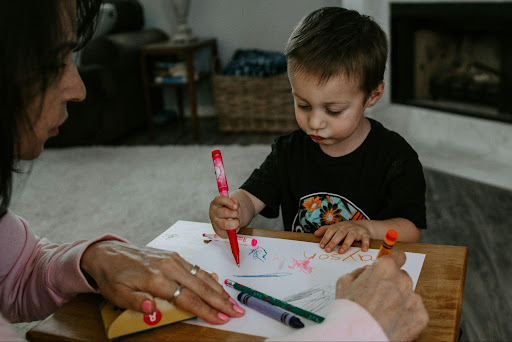
Photo by Gabe Pierce on Unsplash
Many children’s best drawing ideas begin outdoors. Visiting parks, playgrounds, or gardens gives them opportunities to observe new objects, movements, and experiences that later become subjects for creative artwork.
Parents exploring Swing Set Mall can find swing sets, playground equipment, slides, play accessories, and outdoor recreation products designed for residential and community spaces. Since 1989, the company has specialized in equipment that encourages active outdoor play while providing families with options for creating engaging backyard environments.
After spending time outside, children can draw what they observe and practice using new action words, colors, emotions, and descriptive vocabulary connected to their experiences.
Combine Drawing With Simple Word Games
Drawing activities become even more engaging when paired with playful language challenges. One popular option is to place vocabulary words into a container and have children randomly select one before creating an illustration.
Another variation involves guessing games where one child draws a word while others identify it using complete sentences rather than single-word answers. This encourages conversation while reinforcing understanding of both familiar and newly introduced vocabulary.
Teachers may also group related words into themes such as animals, transportation, weather, or food, helping children recognize relationships between different concepts as they draw.
Creativity Helps Vocabulary Grow Naturally
Children are often more willing to experiment with language when learning feels creative rather than instructional. Drawing allows them to explore ideas visually while practicing new vocabulary in an enjoyable, low-pressure environment.
By combining illustrations with storytelling, discussion, reading, and outdoor experiences, parents and educators create multiple opportunities for children to encounter and use unfamiliar words. Over time, these repeated connections strengthen both vocabulary development and communication skills.
When creative expression becomes part of everyday learning, children begin to see language as something to explore rather than memorize. That sense of curiosity can support literacy development for years to come while making every new word another opportunity for imagination.