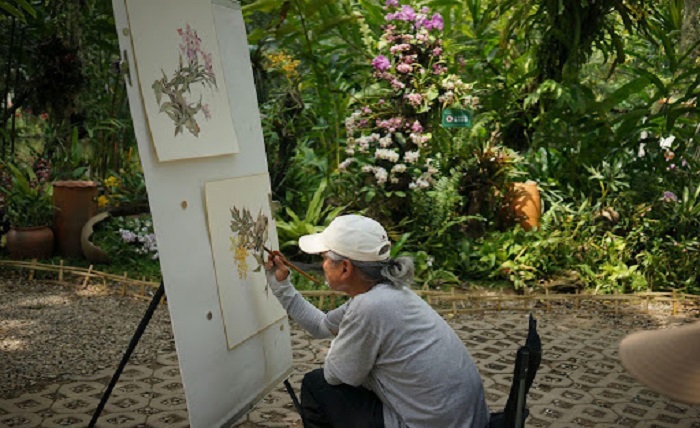
A blank page can feel strangely intimidating when you actually want to draw. You pick up a pencil, wait for an idea, reject the first few possibilities as boring, and eventually spend more time deciding what to create than creating anything.
The easiest way through a creative block is often to stop searching for the perfect subject. Interesting drawing ideas are everywhere once you start looking at ordinary things in terms of shape, texture, light, and color.
Gardens, windows, household objects, changing skies, and memorable moments outdoors can all provide enough material for a sketch. The goal is not necessarily to produce a finished piece. It is to give your hand something interesting to do until ideas begin arriving naturally again.
Look Closely at the Plants You Usually Walk Past
Plants are excellent drawing subjects because they provide recognizable forms without demanding perfect symmetry.
Instead of attempting an entire garden scene, concentrate on one detail. Draw the curve of a leaf, the overlapping petals of a flower, the twisting shape of a stem, or the pattern created by several plants growing together.
Plant collections and designs from https://livetrends.com/ can also provide visual inspiration when you want to explore combinations of natural forms, containers, textures, and greenery.
Try drawing the same plant more than once.
Start with a simple outline. Then create a more detailed version focusing on veins and texture. Finally, exaggerate its shapes and turn it into something more decorative or abstract.
The subject has not changed, but the drawing exercise has.
That is often enough to loosen up creatively without putting pressure on yourself to invent an entirely original concept.
Draw a Familiar Place From an Unfamiliar Angle
When you cannot think of anything to draw, choose somewhere you see every day.
Your backyard, balcony, kitchen window, front steps, or favorite chair can become much more interesting when viewed from an unusual position.
Sit on the floor and look upward. Move close to an object rather than drawing the entire room. Look through a doorway and use its frame as part of the composition.
You can also deliberately leave parts out.
Instead of drawing the entire backyard, sketch only the corner where a fence meets a tree. Rather than drawing a complete table, focus on the objects sitting on it and the shadows they create.
Creative blocks sometimes happen because every idea feels as though it needs to become a major artwork.
A small observational sketch removes that expectation. You are simply recording something you can see.
Use Fireworks to Practice Movement, Light and Color
A dark sky gives you an almost empty background, which makes bursts of light especially interesting to interpret.
Fireworks can inspire studies of curved lines, expanding shapes, glowing centers, falling trails, smoke, and contrasting colors. They do not need to be drawn realistically either. A single burst can become the starting point for an abstract pattern or an entire imagined skyline.
For reference ideas, the colors, effects, and visual variety associated with RedApple can provide plenty of material for exploring how different fireworks might translate onto paper.
Try working on dark paper with lighter pencils, pastels, markers, or paint.
You can also draw the same burst at different stages: the initial streak upward, the first explosion, the fully expanded pattern, and the trails disappearing toward the horizon.
Another option is to concentrate on the scene below rather than the fireworks themselves. Silhouetted rooftops, trees, crowds, reflections on water, or people looking upward can turn a simple sky study into a complete composition.
Turn Ordinary Objects Into a Still Life
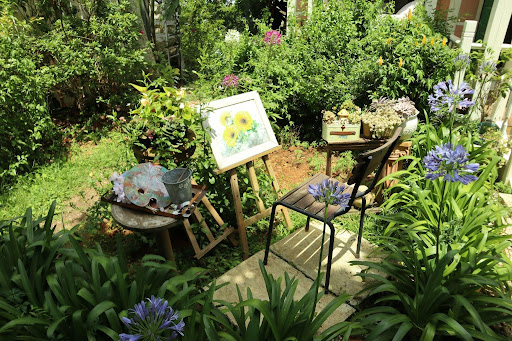
Photo by Russie Vu on Unsplash
You do not need flowers in a vase and a carefully arranged bowl of fruit to create a still life.
Empty your pockets onto a table.
Keys, sunglasses, coins, earbuds, a watch, receipts, and other everyday objects immediately give you several different materials and shapes to work with.
Or open a kitchen cupboard and choose three completely unrelated items.
The stranger the combination, the more interesting the exercise can become.
Arrange objects so they overlap. Move a lamp nearby and observe the shadows. Try drawing reflective surfaces, transparent glass, folded fabric, or textured packaging.
If detailed drawing feels frustrating, simplify everything into basic shapes first.
A mug becomes a cylinder. A book becomes a rectangular block. A pair of glasses becomes overlapping curves. Once those forms feel correct, details can be introduced gradually.
The exercise trains observation while removing the pressure to invent a subject from nothing.
Sketch the Same Scene at Different Times of Day
Light can turn one subject into several completely different drawing ideas.
Choose a view from a window, a tree in the yard, a nearby building, or another scene you can revisit. Sketch it in the morning, late afternoon, and evening.
Do not worry about reproducing every detail each time.
Concentrate on what changes.
Morning shadows may be long and soft. Afternoon light can flatten some shapes while emphasizing others. Near sunset, colors become warmer and silhouettes more pronounced. After dark, windows, streetlights, and the sky create an entirely different composition.
This exercise works particularly well with color, but pencil drawings can explore the same idea through contrast and shading.
You may eventually discover that one particular time of day consistently produces the kind of atmosphere you enjoy drawing most.
Give Yourself a Strange Limitation
Too many possibilities can be just as difficult as having no ideas.
Create a restriction.
Draw something without lifting your pencil from the paper. Give yourself five minutes. Use only circles and straight lines. Draw with your non-dominant hand. Choose three colors and refuse to add another.
You can also take a familiar subject and impose an unusual rule.
Draw a garden without using green. Create a night sky using only black and one other color. Turn household objects into characters. Draw the view outside as though it belonged to a fantasy world.
Restrictions force you to make decisions differently.
The result may be messy, strange, or completely unusable, and that is fine. These exercises are valuable precisely because they are not supposed to become polished finished pieces.
They make drawing playful again.
Build a Page of Ideas Instead of One Perfect Drawing
When creativity feels stuck, filling an entire page with small sketches can be easier than committing to one large image.
Divide the page loosely into sections and draw whatever catches your attention.
A leaf. A cloud. Someone’s shoe. A lamp. A flowerpot. The moon. A hand holding a cup. A strange shadow on the wall.
Let one sketch suggest the next.
You might begin with a plant and notice that the shape of its leaves resembles flames. Those flames might become fireworks. The fireworks could lead to a night skyline, which might suggest windows, rooftops, and silhouettes.
This is how ideas often develop: not through one sudden moment of inspiration, but through connections between ordinary observations.
Creative blocks become harder when every blank page is expected to produce something impressive.
Lower the stakes instead.
Draw the plants around you, study the objects on your desk, look at the changing sky, experiment with light, or deliberately make something strange. Give yourself permission to produce pages that nobody else will ever see.
Once drawing becomes an activity again rather than a performance, the blank page usually stops looking quite so empty.