Goat Drawing Ideas: 40+ Easy, Cute, Realistic and Creative Ways to Draw Goats (Step-by-Step for Beginners and Beyond)
Goat Drawing Ideas: I still smile when I think about my first goat sketch. The horns came out crooked. The beard looked like scribbles. Yet something warm appeared on the paper. Goats carry this lively, curious spirit. They climb tough slopes and still find joy in simple grass. Drawing them lets you borrow a bit of that playful strength.
Many people feel nervous about animal drawings. They worry about getting the horns or eyes wrong. You do not need to worry. Goats forgive small mistakes. Their shapes start simple. With clear steps, you gain confidence fast. This guide shares everything I wish I knew years ago. We move together from basic lines to lively farm scenes. You will finish each part feeling proud and ready for more. Pick up your pencil. Take a deep breath. Let us explore the gentle world of goat drawings.
Why Goats Inspire Artists Everywhere
Goats bring a special mix of mischief and calm. They climb rocky hills without fear. They stay curious about everything around them. Artists love these traits. In many cultures, goats stand for determination and lively energy. Farmers see them as hardy companions. Storytellers use them to show independence. I once felt stuck in a creative rut. One afternoon I sketched a baby goat playing in grass. The simple joy in that drawing lifted my mood. You might discover the same feeling. Drawing goats teaches patience. Each curved horn or soft beard reminds you to slow down and observe. Goats appear in ancient art, zodiac signs, and modern logos.
Their unique features — those rectangular pupils, strong horns, and fluffy beards — create endless artistic possibilities. Beginners enjoy the rounded bodies. Experienced artists dive into detailed fur and dramatic lighting. Charles R. Knight, a legendary wildlife artist, studied real animals for months. His book Animal Drawing: Anatomy and Action for Artists shows clear muscle flow and natural poses, including goats and sheep. Gottfried Bammes also offers excellent guidance in The Artist’s Guide to Animal Anatomy. These experts prove that careful observation turns simple sketches into living art. Start wherever you are. Your first goat may look playful or a little wild. That is part of the fun. Progress comes when you keep going.
Getting Started: Simple Tools and a Friendly Mindset
You need almost nothing to begin. A regular pencil, blank paper or sketchbook, and a soft eraser work perfectly. Colored pencils bring extra life later. Many artists add fineliners for clean outlines. Your attitude shapes everything. Tell yourself: “I am here to enjoy the process.” Mistakes help you learn. I still erase and redraw parts of my sketches. Each correction sharpens my eye.
Follow this gentle three-step path:
Practice 10 to 15 minutes most days. Short sessions keep you fresh. Sit in a comfortable spot. Put on soft music if it helps you relax. Breathe slowly as your pencil moves. Look at clear photos of real goats. Notice how horns curve and how beards hang. Free reference images of farm goats and mountain goats appear on many wildlife sites. Study one feature at a time. You join thousands of beginners who started exactly like you. Stay consistent. You will watch your goats come alive.
Goat Anatomy Made Simple and Useful
Goat Drawing Ideas: Strong drawings rest on basic understanding. Goats differ from other animals in nice ways. Their heads look rectangular from the side. Horns grow in graceful curves or ridges. Eyes show horizontal pupils that give a calm, thoughtful gaze. Start with the head. Draw a slightly rectangular shape. Add curved horns on top. Place floppy ears on the sides. The beard hangs below the chin like soft waves. The body stays compact. The torso forms a rounded rectangle. Legs look sturdy with cloven hooves at the bottom. The tail stays short and often points upward when the goat feels alert. Fur texture varies. Short strokes follow the body direction on the back.
Longer, wavy lines create the beard and belly fluff. Common trouble spots appear early. Horns that look flat lose personality. Fix them by showing slight curves and thickness. Legs that appear stiff improve with gentle bends at the joints. An Atlas of Animal Anatomy for Artists by Fritz Ellenberger and others provides detailed plates of goats. The book shows external views plus muscle layers underneath. Use those ideas lightly. Notice how light falls on the horns and creates soft shadows under the beard. Practice these parts on scrap paper first. Draw ten heads. Then add bodies. You will feel the goat take real form. This knowledge makes every later drawing easier and more satisfying.
Easy Goat Drawing Ideas for Beginners and Kids
Simple ideas build quick wins. These let you finish fast and feel good. Begin with a basic goat face. Draw a rounded rectangle for the head. Add two curved horns. Place floppy ears. Draw a small snout and the signature beard with wavy lines. Add two horizontal eyes. You finish in minutes. A cute baby goat (kid) feels extra charming. Make the head larger. Keep legs short and stubby. The body stays extra round. Big eyes and a tiny beard create pure sweetness. Try a standing goat next. Use an oval for the body. Attach four sturdy legs. Place the head on top. The tail adds a cheerful touch.
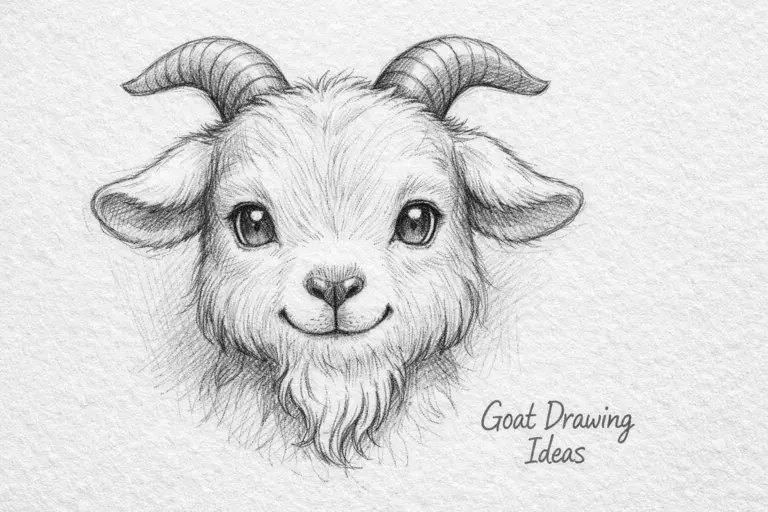
Outline versions work wonderfully for kids. Use thick, confident lines. Skip heavy shading at first. Color later with crayons or markers for bright results.
Use this easy framework for any simple sketch:
I return to these easy versions on busy days. They remind me that art should feel fun, not perfect. Kids love drawing a whole farm scene with several goats together. It teaches them how to share space on the page. Choose one idea right now. Complete it. Celebrate the small goat you brought to life.
Cute and Kawaii Goat Drawing Ideas
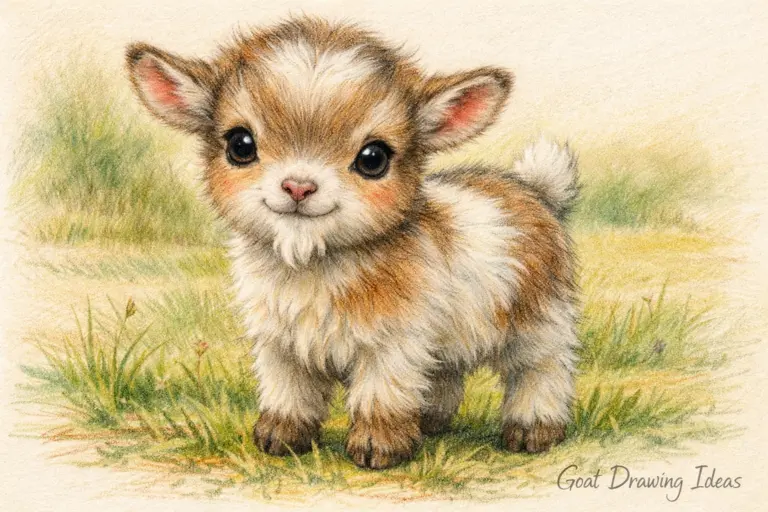
Goat Drawing Ideas: Cute goats spread instant smiles. Big sparkling eyes and soft rounded shapes define this style. These drawings feel friendly and full of personality. Work with chibi proportions. Make the head bigger than the body. Eyes take up generous space. Add tiny highlights inside for extra life. A kawaii goat might hold a flower in its mouth or wear a small bell. Exaggerate the fluffy beard and perky ears. Soft, rounded lines everywhere keep the mood light.
Steps for one simple cute goat:
I draw these when I need a quick mood boost. They turn ordinary days brighter. You can give each goat its own expression — curious, sleepy, or cheeky. These versions shine in sketchbooks, greeting cards, or as gifts. Children enjoy coloring them too. Try different accessories like bows or tiny flowers. Play freely. Watch how one raised eyebrow completely changes the goat’s mood.
Realistic Goat Drawing Ideas with Shading
Realistic goats reward patient eyes. Focus on light, shadow, and natural texture. Begin with the head structure. Sketch light guidelines. Shape the rectangular snout. Place horizontal pupils carefully. Build the horns with subtle ridges and thickness. Fur needs direction. Short strokes follow muscle flow on the back and sides. Longer, softer marks create the beard. Start with light layers. Darken slowly for depth. Leave white spaces for highlights on the horns and nose. Blend gently with your finger or a soft tissue for smooth transitions. Charles R. Knight spent years observing live animals. His work shows how light reveals form and character. Apply the same idea. Notice how shadows fall under the jaw and around the legs.
For a full realistic head:
I once spent a whole evening on one realistic beard. When the light caught it just right, the goat seemed ready to step off the page. That quiet thrill makes the time worthwhile. Practice on domestic farm goats first. Their varied colors teach excellent shading. Mountain goats offer white coats with subtle gray tones. Take your time. Realism grows through steady practice.

Farm and Mountain Goat Drawing Ideas
Goat Drawing Ideas: Goats belong in open spaces. Farm scenes show peaceful daily life. Mountain goats bring drama and strength. Draw a farm goat standing near a barn. Add simple fence lines and grass tufts. The goat looks content and grounded. A mountain goat on rocky cliffs feels adventurous. Show strong legs gripping the edge. Background peaks add depth and story. Baby goats in a grassy field create tender moments. Draw them leaping or nuzzling. Soft light and flowers complete the gentle mood. Silhouette versions work beautifully at sunset. Dark goat shapes against warm sky make striking images.
Try these scene starters:
I love placing goats in nature. The surroundings tell part of their story. Experiment with different times of day. Morning light feels fresh. Golden hour adds warmth. These scenes turn simple animals into complete pictures that viewers remember.

Tribal, Geometric and Minimalist Goat Art
New styles refresh your hand. Tribal goats use bold black lines and repeating patterns. Sharp angles highlight the horns and beard. Empty space adds power. Geometric goats break the form into clean triangles and circles. This style suits modern logos or abstract decorations. Minimalist goats need only a few elegant lines. One strong silhouette captures the goat’s curious spirit.
For a simple tribal goat:
These approaches forgive tiny errors. They celebrate energy over perfect detail. I switch to minimalist when details feel heavy. The clean lines bring calm and clarity. Tattoo artists often choose tribal goats. Clean lines and strong shapes translate well to skin.
Fantasy and Creative Goat Drawing Ideas
Goat Drawing Ideas: Fantasy opens exciting doors. Imagine a Capricorn zodiac goat with starry horns. Add glowing eyes or ethereal mist around the hooves. Anime goats show large expressive eyes and flowing beard lines. Dynamic poses suggest movement and personality. Create a fantasy creature by blending goat features with magical elements. Perhaps wings of light or flowers growing from the horns. Aesthetic versions pair goats with delicate flowers or soft pastel backgrounds. These feel dreamy and peaceful.
Try these creative prompts:
Fantasy lets you break rules. Make horns larger than life. Add magical sparkles. These drawings turn into personal stories. I enjoy fantasy goats when regular life feels ordinary. They remind me that imagination has no limits.
Creative Sketchbook and Doodle Ideas
Sketchbooks thrive on quick, free experiments. Try five-minute doodles. Loose lines catch movement. Draw jumping goats, curious head tilts, or goats chewing flowers. Aesthetic pages mix several small goats with leaves, fences, or mountains. Black and white versions look elegant and timeless. Goat family scenes teach composition. Show different sizes for natural depth.
Helpful prompts:
Date every page. Watch your style evolve over weeks. I keep an old sketchbook filled with goat doodles. Some look silly. Others surprise me with unexpected charm. All of them taught me something valuable.
Step-by-Step Master Tutorials
How to Draw a Goat Face Easy
This face takes about ten minutes. It builds solid confidence.
Realistic Goat Head Step by Step
Use the same base. Refine shapes for accuracy. Add ridges to the horns. Layer directional fur. Darken shadows under the jaw. Highlight the eyes and nose tip. Spend extra time on the beard — it shows character.
Cute Baby Goat Step by Step
Make the head larger. Keep legs short. Add big shining eyes and a tiny beard. Use soft rounded lines throughout. Brighten with gentle colors if you like.
Standing Farm Goat
Draw an oval body. Attach four sturdy legs with slight bends. Place the head naturally. Add tail and beard. Include simple grass or fence lines.
Mountain Goat Climbing
Show the body angled upward. Emphasize strong legs gripping rocks. Add dramatic horns and determined expression. Background cliffs complete the adventurous feel. Practice these slowly. Repeat your favorites. You will notice clear improvement.
Pro Tips That Make Your Goats Better
Goat Drawing Ideas: Observe real goats in videos or photos. Notice how their beards move and how light hits the horns. Build shading in light layers. Darken gradually. This keeps fur looking soft instead of heavy. Vary your line thickness. Thicker lines bring parts forward. Thinner lines add delicate details. Always add a small highlight in the eyes. Life appears instantly. Gesture lines help lively poses. Sketch loose movement first, then refine. I gathered these tips through years of trial. Sharing them helps you skip early frustration.
Building Scenes That Tell Warm Stories
Backgrounds give goats context and feeling. Simple barn lines suggest peaceful farm life. Rocky mountains show strength and adventure. Place your goat slightly off-center. This creates natural interest. Low angles make goats look powerful. Eye-level views feel friendly and close. Lone goat scenes carry quiet independence. Small groups show companionship and gentle community. Try a grassy field with soft flowers. Or a quiet barn at golden hour. Composition guides the viewer’s eye and emotions.
Common Mistakes and Gentle Fixes
Goat Drawing Ideas: Beginners sometimes make horns too straight or thin. Add gentle curves and thickness. Eyes placed too close together lose the goat’s calm look. Move them farther apart. Stiff legs improve with small bends at the joints. Over-dark shading hides texture. Keep some light areas showing. If your goat looks too serious, soften the beard and add a slight head tilt. Every artist faces these moments. I still do. Correct gently. Each fix becomes part of your growing style.
Your 30-Day Goat Drawing Challenge
Challenge yourself kindly. Draw one goat idea each day.
Week 1: Simple faces and heads.
Week 2: Cute and cartoon goats.
Week 3: Realistic heads with shading.
Week 4: Full bodies, scenes, and creative versions.
Share your drawings with friends or note them in a journal. Notice how your confidence grows week by week. I finished similar challenges. They deepened my skills and my love for drawing. Join in. Start today. Seeing your own progress feels deeply rewarding.
Frequently Asked Questions About Goat Drawing Ideas
Final Thoughts – Your Goat Adventure Awaits
Goat Drawing Ideas: Drawing goats connects you to simple joys and quiet strength. You capture curiosity, resilience, and gentle mischief on paper. Each sketch builds patience and sharpens your observation. You also discover your own creative spirit along the way. My favorite goats change with my mood. Sometimes a soft baby goat feels right. Other times a strong mountain goat speaks to me. Your preferences will grow too. You now hold clear steps, anatomy basics, and many creative ideas. Begin small. Finish one drawing. Feel the satisfaction. Then try the next. The farm and hills wait inside your sketchbook.
Pick up your pencil today. Draw that first goat. I truly believe in your ability. You will create something honest and full of life. Which goat calls to you first — the playful baby kid, the sturdy farm goat, or the adventurous mountain climber? Start with that one. Keep drawing. The more you practice, the more personality your goats show. Your art journey matters. Share your work when you feel ready. Encourage others. We all grow stronger together, just like a curious herd exploring new ground. Thank you for spending time here. Now go create. The gentle spirit of the goat awaits your lines.