Drawing Tips for Beginners: A Complete Step-by-Step Guide to Learning Faster
Many beginners feel confused when they start drawing. Lines look shaky. Shapes feel uneven. Simple sketches look difficult. Most new artists face the same problems early. Drawing takes practice, observation, and strong fundamentals. Natural talent helps some people at first. Daily drawing practice improves skills much faster. Simple exercises train hand-eye coordination over time. Basic sketching techniques also improve line control and accuracy.
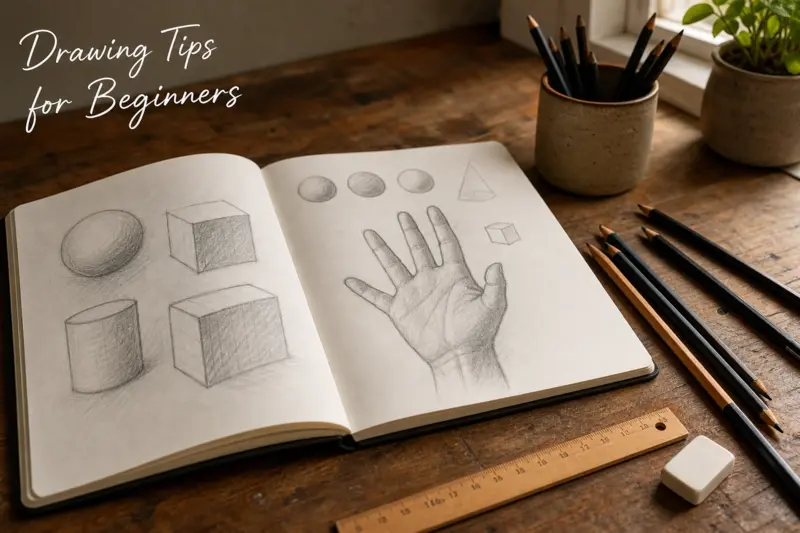
Why Most Beginners Struggle With Drawing
The Myth That Drawing Requires Natural Talent
Many people believe artists are born with special talent. That idea stops beginners from practicing consistently. Drawing works like any other creative skill. Regular practice improves artistic ability over time. Most skilled artists train their observation skills daily. They study shapes, proportions, lighting, and perspective carefully. Repetition strengthens hand-eye coordination and line control. Simple drawing exercises improve sketching accuracy faster than random practice.
Beginners often skip drawing fundamentals too early. That mistake creates weak structure and uneven sketches. Basic sketching techniques teach artists how forms connect naturally. Shape construction also improves realistic drawing and composition skills. Observation matters more than natural ability. Artists must learn to draw what they actually see. New artists often draw symbols from memory. That habit weakens observational drawing and object accuracy. Careful observation improves proportion, shading, and depth creation. It also supports stronger anatomy drawing and still life sketching.
Common Frustrations New Artists Experience
Most beginners struggle with shaky lines at first. Weak line control makes sketches look messy and uncertain. Bad proportions also frustrate many new artists. Faces, hands, and objects often look uneven or stretched. Perspective drawing creates another common problem. Flat sketches lack depth and realistic form. Many beginners also struggle with shading techniques. Shadows may look muddy or overly dark. Some artists press pencils too hard while sketching. Heavy lines reduce flexibility during early drawing stages.
Drawing from observation feels difficult for many beginners. The eye notices details differently than the hand draws them. Comparing artwork to experienced artists creates unnecessary pressure. Professional artists often practice for many years consistently. Social media also affects beginner artist confidence. Many people compare unfinished skills to polished artwork online. That comparison often leads to frustration and slow progress. It may also reduce daily sketchbook practice.
The Beginner Mindset That Speeds Up Improvement
Progress matters more than perfect sketches. Small improvements create stronger drawing habits over time. Mistakes help artists understand drawing weaknesses clearly. Each sketch reveals areas that need more practice. Structured drawing practice exercises improve skills faster. Random doodling rarely builds strong artistic fundamentals. Short daily sessions work better than rare long sessions. Consistent practice strengthens sketching fundamentals steadily. Patience also plays an important role in art training. Drawing skills improve through repetition and careful observation.
Fear of failure blocks many beginner artists early. Some people avoid difficult subjects after weak results. Perfectionism creates another common problem for beginners. Artists may restart sketches repeatedly without finishing them. Quitting too early also slows artistic development. Most drawing improvement happens through long-term consistent practice. Lack of confidence affects many self-taught artists. Simple beginner art exercises help reduce drawing hesitation gradually. Drawing Tips for Beginners should focus on realistic progress. Strong habits matter more than instant results.
Essential Drawing Tools Beginners Actually Need
Basic Traditional Drawing Supplies
Many beginners buy too many art supplies early. A simple setup works better for learning drawing fundamentals. Graphite pencils support most beginner sketching exercises. HB pencils create balanced lines and soft shading. 2B and 4B pencils help with darker shadows. These pencils improve value study and texture drawing practice. A quality sketchbook helps artists practice consistently. Choose paper that handles pencil shading without tearing easily. Medium-sized sketchbooks work well for daily drawing habits. They also support quick gesture drawing and observational sketching. An eraser helps clean unwanted marks and improve proportions. Kneaded erasers lift graphite without damaging drawing paper.
A sharpener keeps pencil tips clean and accurate. Sharp pencils improve line art and contour drawing precision. Fineliner pens help artists practice line confidence. They also support illustration work and shape construction exercises. Blending tools soften shadows and smooth graphite transitions. Blending stumps work well for realistic sketching and value shading. Rulers also help with perspective drawing basics. Straight guidelines improve symmetry and object alignment.
Optional Digital Drawing Tools for Beginners
Digital drawing tools offer flexible practice options. Many beginners use them for illustration and character design. Drawing tablets replace traditional paper during digital sketching. They help artists create cleaner edits and layered artwork. Stylus pens improve control during digital drawing practice. Pressure-sensitive pens also support shading and brush variation.
Beginner-friendly software includes simple brushes and drawing tools. Basic layouts reduce confusion for new digital artists. Digital art also helps artists test color and composition quickly. Undo features make practice less frustrating for beginners. Traditional sketching still matters for artistic development. Many artists combine digital drawing with sketchbook practice.
Cheap vs Expensive Art Supplies
Expensive tools do not replace drawing practice exercises. Strong observation skills matter more than premium supplies. Many beginners overspend before learning basic sketching techniques. That habit often creates unnecessary pressure and distraction. Affordable supplies work well for beginner art exercises. Simple pencils and paper support most drawing lessons for beginners.
Artists improve through repetition, not expensive materials. Daily sketching habits create stronger progress over time. Focus on line control, shading, and proportion practice first. Those skills support every drawing style later. Drawing Tips for Beginners should stay practical and simple. A small tool set keeps learning organized and affordable.
Learn the Core Drawing Fundamentals First
Start With Simple Shapes
Every complex drawing starts with basic shapes. Simple forms create structure and improve drawing accuracy. Circles help artists practice smooth curved lines. They also support face drawing and anatomy sketching. Cubes teach depth, edges, and perspective basics. They help beginners understand three-dimensional form clearly. Cylinders improve object construction and shading practice. Many everyday objects use cylindrical forms naturally.
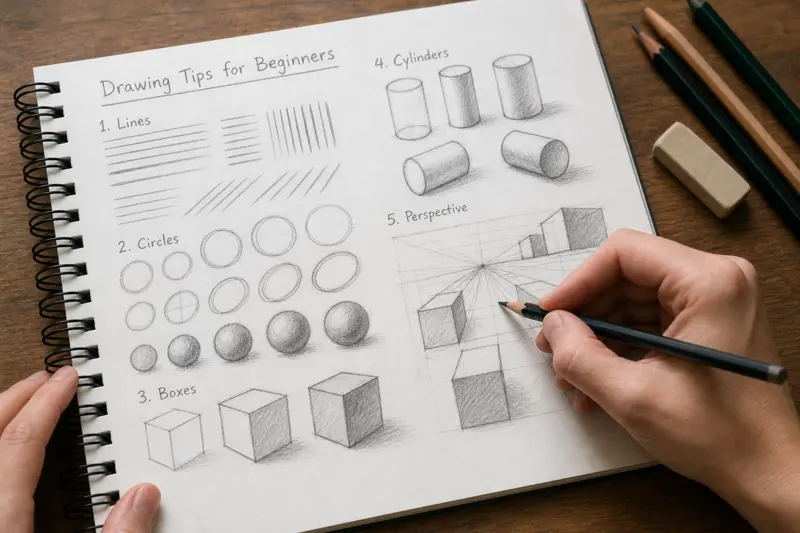
Artists should break objects into smaller shapes first. This method simplifies difficult sketches quickly. A face begins with circles and guidelines. A bottle often starts with cylinders and ellipses. Shape construction improves observational drawing skills steadily. It also reduces common beginner proportion mistakes. Drawing Tips for Beginners should always include shape practice first. Strong fundamentals support realistic and creative sketching later.
Improve Line Control and Hand Coordination
Line control affects every drawing style. Clean lines improve sketch clarity and object structure. Straight-line drills strengthen hand coordination and pencil control. Artists should draw lines in different lengths and angles. Curved-line exercises improve fluid movement and shape accuracy. These drills help with contour drawing and gesture sketching. Many beginners draw only from the wrist. That habit limits movement and creates stiff sketches.
Drawing from the shoulder creates smoother and longer lines. It also improves confidence during large sketching movements. Warm-up exercises prepare the hand before detailed drawing. Quick drills reduce stiffness and improve control gradually. Daily line practice supports stronger illustration and line art skills. Even short sessions improve consistency over time.
Understanding Proportions
Proportions control size relationships inside a drawing. Poor proportions make sketches look unrealistic quickly. Artists should compare object sizes visually before sketching. This habit improves accuracy during observational drawing. Simple measuring techniques help beginners draw balanced subjects. Pencil measuring works well for still life drawing practice. Artists can compare width, height, and angle relationships carefully. These comparisons improve face drawing and anatomy sketching.
Many beginners draw features too large or too small. Eyes and hands often lose correct proportion first. Starting with large shapes improves drawing balance early. Details should come after structure and placement. Drawing fundamentals depend heavily on proportion practice. Strong proportions improve realism, composition, and depth creation.
Perspective Basics Made Simple
Perspective creates depth and space in artwork. It helps flat sketches look more realistic. One-point perspective uses one vanishing point. This method works well for roads and hallways. Parallel lines move toward the same distant point. That effect creates realistic depth naturally. Two-point perspective uses two vanishing points. Artists often use it for buildings and box shapes. Perspective grids improve alignment and object placement. They also support landscape drawing and architectural sketching. Many beginners ignore perspective during early practice. That mistake creates flat and distorted drawings. Simple perspective exercises improve spatial understanding steadily. Cubes and rooms make useful beginner practice subjects.
Light, Shadow, and Shading Techniques
Shading gives drawings depth and realistic form. Light direction controls shadow placement and highlights. Artists should start with simple value scale exercises. These exercises teach light-to-dark shading transitions. A value study improves shadow rendering and depth creation. It also strengthens observational drawing skills. Cross-hatching creates shadows through layered line patterns. This technique works well for line art and illustration.
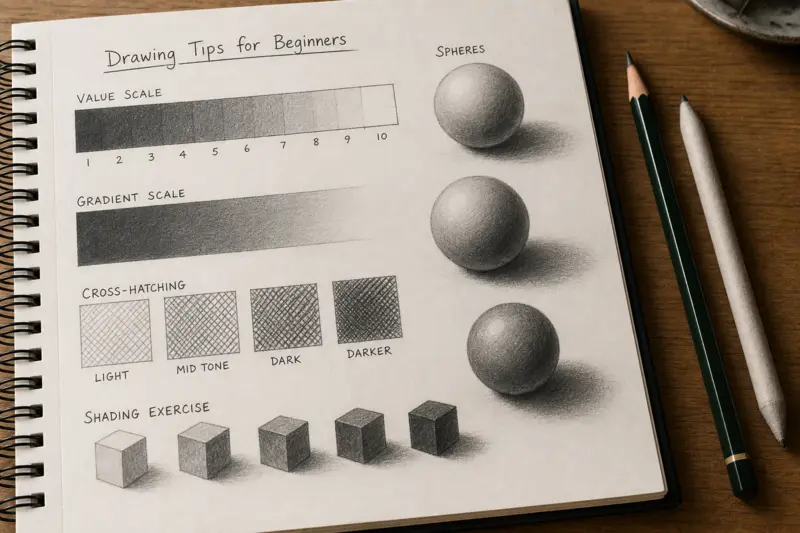
Blending softens graphite and smooths tonal changes. Blending stumps help create realistic shading effects. Highlights show where light hits an object directly. Strong contrast makes forms appear more three-dimensional. Many beginners shade randomly without light planning. That habit weakens form and texture drawing. Controlled shading improves realism and object clarity. It also supports face drawing and still life sketching.
Observation Skills Every Artist Needs
Observation skills shape every strong drawing. Artists must study details carefully before sketching. Many beginners draw symbols instead of real forms. They draw what they expect instead of what exists. Artists should focus on shapes, angles, and spacing. This habit improves sketch accuracy quickly. Negative space exercises train visual awareness effectively. Negative space means the empty area around objects.
Studying empty shapes improves proportion and composition skills. It also helps artists notice alignment mistakes faster. Observation improves texture drawing and shadow placement. It also strengthens anatomy drawing and object sketching. Slow observation often creates better results than fast sketching. Careful study improves drawing accuracy over time. Drawing Tips for Beginners should always include observation practice. Strong observation supports every artistic style and technique.
Best Drawing Exercises for Beginners
Daily Warm-Up Exercises
Warm-up exercises prepare the hand for sketching practice. They improve line control and drawing accuracy gradually. Line drills help artists create cleaner and steadier strokes. Practice horizontal, vertical, and curved lines daily. Shape repetition strengthens drawing fundamentals and hand coordination. Circles, cubes, and cylinders improve shape construction skills. Artists should draw shapes in different sizes repeatedly. This exercise improves proportion and spatial awareness.
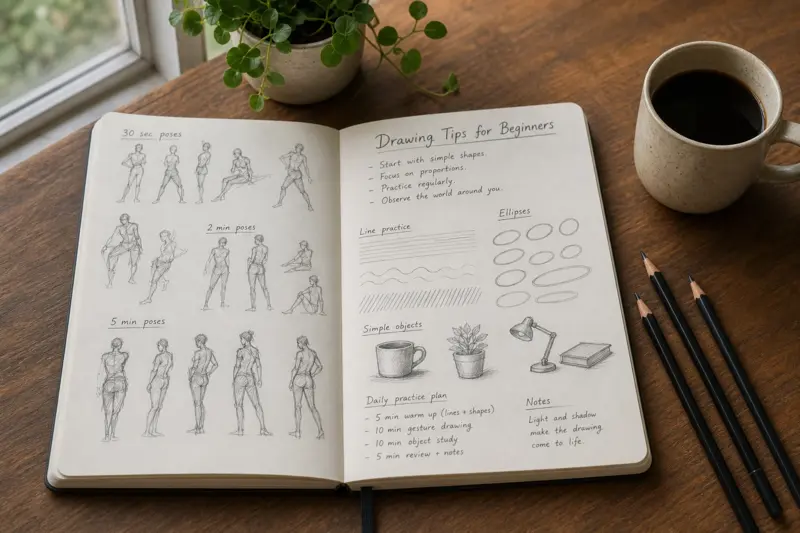
Gesture sketching trains speed and observational drawing skills. Quick sketches capture movement and basic form efficiently. Short gesture exercises improve anatomy drawing and figure structure. They also reduce stiff and unnatural poses. Hand coordination practice supports smoother sketching movements. Drawing from the shoulder improves longer line control. Many artists begin sessions with simple warm-up drills. These exercises improve focus before detailed drawing work. Daily drawing practice exercises strengthen sketching habits steadily. Short sessions often produce better consistency than long sessions.
10-Minute Sketching Exercises
Short sketching sessions improve observation and decision-making skills. They also reduce pressure during beginner drawing practice. Quick object sketches train artists to simplify forms. Household items work well for beginner art exercises. Artists should sketch cups, books, shoes, or small tools. Simple subjects improve proportion and perspective understanding. Timed drawing sessions increase sketching speed gradually. Short limits encourage artists to focus on major shapes first. Ten-minute studies also improve visual storytelling and composition basics. Artists learn to avoid unnecessary detail early.
Simple still-life setups help beginners study light and shadow. Fruit, bottles, and boxes create useful shading practice. Still life drawing improves observation and texture drawing skills. It also strengthens value study and depth creation. Regular timed practice supports stronger sketchbook habits. It also improves drawing workflow and visual memory.
Copying vs Drawing From Observation
Studying references helps artists understand shapes and proportions. Reference practice improves anatomy drawing and object accuracy. Artists learn structure faster by observing real subjects carefully. Photos also help beginners study lighting and perspective. Copying artwork teaches line art and composition methods. It also improves visual learning during early practice stages. Artists should avoid tracing during skill-building exercises. Tracing limits observation and weakens hand-eye coordination. Observation drawing trains the eye to notice detail naturally. This skill supports realistic sketching and creative illustration.
Drawing from life improves depth, texture, and shadow understanding. Real objects also reveal subtle shape variations clearly. Balanced practice creates stronger artistic development. Artists should combine reference study with observation exercises regularly.
Beginner-Friendly Subjects to Practice
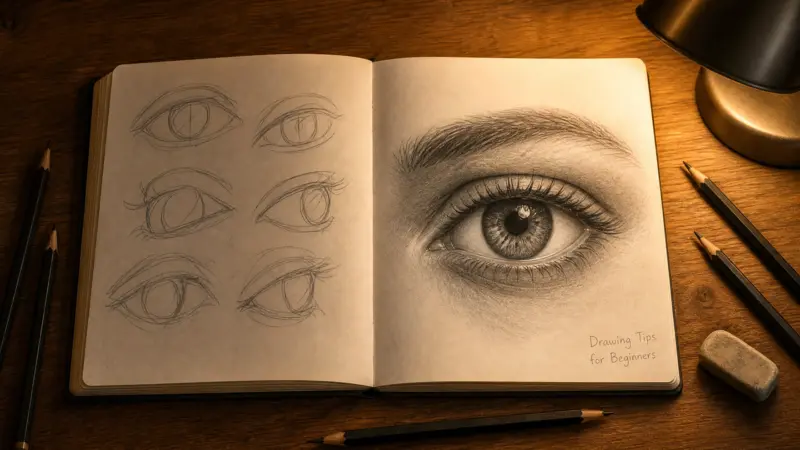
Simple subjects help beginners practice without feeling overwhelmed. Easy sketches improve drawing confidence and shape recognition. Faces teach symmetry, proportion, and feature placement. Artists should begin with basic head construction first. Hand drawing improves observation and anatomy understanding. Hands also strengthen finger proportion and gesture skills. Eye drawing teaches shading and texture techniques. Eyes help artists study highlights and shadow rendering carefully.
Household objects make excellent beginner sketching subjects. They provide clear forms and simple perspective practice. Plants and flowers improve contour drawing and organic shape observation. Leaves also help artists practice line variation naturally. Cartoon characters teach expression and simplified shape construction. They also support beginner illustration and creative sketching practice. Drawing different subjects prevents repetitive practice habits. Variety improves artistic flexibility and visual understanding. Drawing Tips for Beginners should include structured daily exercises. Consistent practice supports long-term artistic improvement.
A Simple 30-Day Beginner Drawing Roadmap
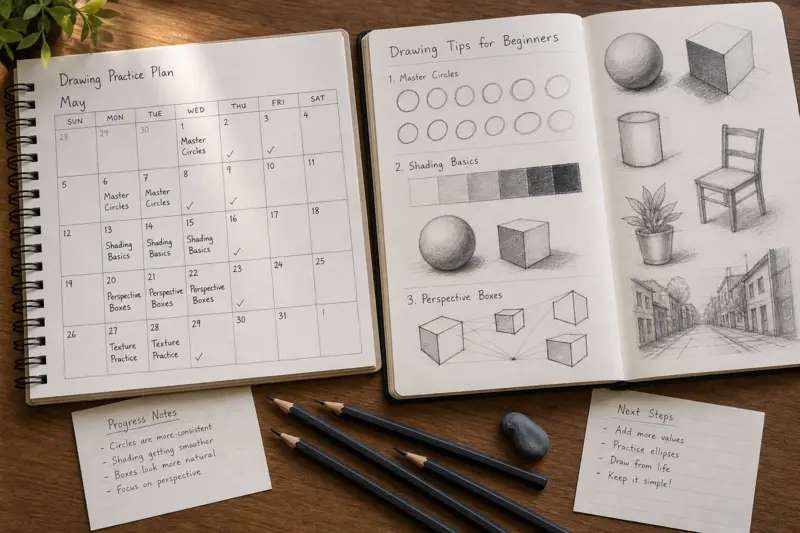
Many beginners practice without a clear structure. A simple roadmap creates steady artistic progress. This 30-day plan focuses on drawing fundamentals first. Each week builds important sketching and observation skills.
Week 1 — Building Control and Confidence
The first week should focus on control and accuracy. Simple exercises strengthen hand-eye coordination quickly. Practice circles, cubes, and cylinders every day. These forms support shape construction and perspective drawing later. Draw straight lines in different directions repeatedly. Line drills improve line control and drawing precision. Practice curved lines with smooth wrist and shoulder movement. Curved exercises help with contour drawing and anatomy sketching. Sketch simple household objects using basic shapes first. Cups, books, and boxes work well for beginners. Keep sketches loose during early practice sessions. Avoid detailed shading during the first week. Daily warm-up exercises improve sketching consistency gradually. Short sessions help artists build stronger drawing habits.
Week 2 — Understanding Form and Perspective
The second week should focus on form and depth. Artists should begin studying three-dimensional structure carefully. Practice drawing cubes from different angles daily. Cube exercises improve spatial awareness and perspective understanding. Draw cylinders with visible top and bottom ellipses. This practice strengthens form construction and shading skills. Study one-point perspective using roads or room sketches. Perspective grids help align shapes correctly.
Practice two-point perspective with buildings and boxes. This exercise improves realistic sketching and composition basics. Add simple shading to forms using one light source. Shading improves depth creation and shadow rendering. Study highlights, midtones, and dark shadow areas carefully. Value practice strengthens observation and texture drawing skills.
Week 3 — Drawing Real Subjects
The third week introduces more realistic drawing practice. Artists should focus on observation and proportion accuracy. Practice face drawing using simple guidelines first. Basic head shapes improve feature placement and symmetry. Sketch hands using simple block and cylinder forms. Hand drawing strengthens anatomy observation and gesture skills.
Draw everyday objects from direct observation daily. Shoes, bottles, and tools improve shape recognition naturally. Observation practice trains artists to notice real details. This skill improves realistic drawing and visual storytelling. Use light sketch lines before adding darker details. Early construction lines improve drawing balance and accuracy. Timed sketching sessions also improve drawing workflow speed. Quick studies strengthen visual memory and composition skills.
Week 4 — Developing Style and Consistency
The final week combines previous drawing techniques together. Artists should focus on consistency and creative sketching. Practice combining perspective, shading, and proportion skills. Mixed exercises improve overall artistic understanding. Create simple illustration ideas using learned techniques. Creative sketching strengthens visual thinking and composition planning. Maintain a daily sketch habit during the final week. Consistent practice improves long-term artistic development.
Track progress using older and newer sketches together. Comparison helps artists notice specific improvements clearly. Experiment with different drawing styles and subjects carefully. Cartooning, realism, and doodling build creative flexibility. Drawing Tips for Beginners should always include structured routines. Clear practice systems improve focus and skill growth.
How to Measure Improvement Without Getting Discouraged
Many beginners expect instant drawing improvement. Artistic growth usually happens through repeated practice. Save older sketches for future comparison. Before-and-after drawings reveal progress more clearly. Track specific skills instead of overall talent. Focus on line control, shading, and proportion accuracy. Artists improve at different speeds naturally. Consistent sketchbook practice matters more than fast results.
Use small milestones during beginner art training. Simple goals help organize daily drawing exercises. Realistic expectations reduce frustration during difficult practice periods. Strong drawing habits support long-term artistic improvement.
Beginner Mistakes That Slow Down Progress
Drawing Details Too Early
Many beginners focus on details before structure. That habit creates uneven and unbalanced sketches. Artists should start with large shapes first. Basic forms improve composition and object placement. Simple construction lines guide the drawing process clearly. They help artists adjust proportions before adding detail. Face drawing requires structure before eyelashes or hair. Object sketching also needs shape planning first. Light sketch lines improve flexibility during early stages. Dark outlines too early reduce correction options.
Artists should refine drawings step by step. This method improves realism and visual balance. Drawing Tips for Beginners should always prioritize structure first. Strong foundations support accurate shading and perspective later.
Ignoring Fundamentals
Many beginners skip drawing fundamentals too quickly. They focus only on finished sketches or complex subjects. Fundamentals improve every drawing style and technique. They support realism, illustration, cartooning, and concept art. Line control affects sketch clarity and precision. Perspective creates believable depth and space. Proportion improves anatomy drawing and object accuracy. Observation skills strengthen realistic sketching and composition.
Shading techniques help artists create form and contrast. Value studies improve shadow rendering and texture drawing. Fancy sketches cannot hide weak fundamentals for long. Basic skills shape every successful artwork. Artists should practice drawing exercises consistently. Daily repetition strengthens artistic development steadily.
Practicing Without Structure
Random practice often creates slow improvement. Focused exercises build stronger sketching skills faster. Many beginners draw only familiar subjects repeatedly. That habit limits artistic growth and flexibility. Structured practice targets specific weaknesses directly. Artists improve faster through focused art training. One session can focus on perspective drawing basics. Another session can improve shading and blending techniques.
Timed sketching exercises strengthen observation and speed. Gesture drawing improves movement and anatomy understanding. Practice routines also support better sketchbook habits. Consistent schedules improve long-term artistic discipline. Artists should track exercises and progress regularly. Clear goals improve practice efficiency and focus.
Comparing Your Art to Professionals
Many beginners compare their sketches to professional artwork. That comparison creates unrealistic expectations early. Experienced artists often practice for many years consistently. Their skills develop through repetition and structured learning. Healthy comparison focuses on techniques instead of perfection. Artists should study composition, shading, and line control carefully.
Observation helps beginners learn useful drawing methods. Copying styles blindly often weakens creative growth. Compare current sketches with older personal work instead. This method reveals steady improvement more clearly. Artists should notice progress in small areas first. Cleaner lines and better proportions show real growth. Drawing Tips for Beginners should encourage realistic comparisons. Balanced expectations support stronger drawing habits over time.
Quitting Too Soon
Many beginners stop practicing too early. Slow progress often frustrates new artists quickly. Drawing skills improve through repeated practice sessions. Artistic development rarely happens instantly. Early sketches usually contain uneven proportions and weak shading. These problems improve with focused drawing exercises. Observation skills also take time to develop properly. Artists learn accuracy through careful visual study.
Consistent sketchbook practice strengthens artistic memory gradually. Daily drawing habits improve coordination and confidence naturally. Small improvements matter during beginner art training. Better lines and cleaner shapes show real progress. Artists should focus on steady practice instead of perfection. Long-term consistency supports stronger artistic skills.
How to Build a Consistent Drawing Habit
Creating a Realistic Daily Practice Routine
Many beginners practice too much at once. Long sessions often create mental fatigue and inconsistency. Short daily sessions work better for skill development. Fifteen to thirty minutes supports steady drawing improvement. Consistent sketching strengthens hand-eye coordination gradually. It also improves line control and observation skills. Artists should choose a fixed practice time daily. Regular schedules create stronger drawing habits for artists. Morning sketching helps some artists stay focused longer. Evening sessions also work well for quiet observation practice. Practice routines should include specific drawing exercises. Focused sessions improve artistic skills faster than random sketching.
One day can focus on shading techniques for beginners. Another session can improve perspective drawing basics. Warm-up exercises prepare the hand before detailed sketching. Simple line drills improve coordination and pencil control. Consistency matters more than intense practice sessions. Small daily improvements support long-term artistic growth. Drawing Tips for Beginners should encourage sustainable practice habits. Balanced routines reduce frustration during early learning stages.
Sketchbook Habits That Improve Skills Faster
A sketchbook helps artists organize daily practice effectively. Regular sketchbook use strengthens visual learning and creativity. Daily sketches improve observation and drawing accuracy steadily. Short studies also strengthen composition and shape recognition. Artists should sketch simple subjects regularly. Household objects and plants create useful drawing practice ideas. Drawing challenges encourage variety during sketchbook practice. They help artists explore new subjects and techniques. Quick challenges improve creative sketching and visual storytelling. They also prevent repetitive drawing habits.
Idea collection supports stronger artistic planning. Artists should save reference ideas, shapes, and composition concepts. Small sketchbook notes improve creative workflow and organization. Simple thumbnails also help artists test illustration ideas quickly. Sketchbooks reveal long-term artistic progress clearly. Older pages help artists track improvement over time.
Staying Motivated When Progress Feels Slow
Many beginners expect fast artistic improvement. Drawing skills usually develop through repeated practice. Small improvements often appear before major changes. Cleaner lines and better proportions show real progress. Artists should notice specific skill improvements regularly. Observation skills and shading control improve gradually. Overworking often creates burnout during beginner art training. Long stressful sessions reduce focus and practice quality.
Short breaks help artists maintain steady sketching habits. Balanced schedules improve long-term consistency naturally. Trying different subjects also keeps practice interesting. Artists can alternate between faces, objects, and landscape drawing. Creative sketching exercises reduce repetitive practice routines. They also improve imagination and composition skills. Studying artwork carefully provides useful visual inspiration. Observation helps artists understand texture, form, and lighting. Drawing Tips for Beginners should focus on steady learning habits. Consistent practice creates stronger artistic development over time.
How Beginners Can Develop Their Own Drawing Style
Why Style Comes After Fundamentals
Many beginners search for an art style too early. Strong fundamentals should come before personal style development. Drawing fundamentals support every artistic direction later. Line control improves clean illustration and sketch accuracy. Perspective drawing helps artists create believable depth. Proportion skills improve anatomy drawing and face structure. Observation practice strengthens realistic sketching and composition skills. Shading techniques also improve texture and form creation. Artists who skip fundamentals often struggle with consistency. Weak basics limit creative flexibility and visual storytelling.
Style develops naturally through repeated drawing practice. Artists build preferences while studying shapes, shading, and composition. Daily sketchbook practice also shapes visual habits gradually. Consistent exercises reveal natural artistic tendencies over time. Drawing Tips for Beginners should focus on skill development first. Strong fundamentals create more freedom during creative work.
Exploring Different Art Styles
Trying different styles improves artistic flexibility and visual understanding. It also helps artists discover personal creative interests. Realism focuses on observation, proportion, and accurate shading. This style strengthens anatomy drawing and texture rendering. Cartooning simplifies shapes and exaggerates expressions intentionally. Artists use clean lines and clear forms frequently.
Anime drawing often uses stylized faces and dramatic expressions. Large eyes and simplified anatomy appear in many designs. Doodling improves creative sketching and visual imagination naturally. Loose sketches also reduce pressure during daily drawing practice. Illustration combines storytelling, composition, and artistic design. Illustrators often mix realism with stylized visual elements. Experimenting with multiple styles improves creative problem-solving. Artists learn different drawing techniques through varied practice. Style exploration should include observation and technical study. Balanced practice strengthens artistic growth steadily.
Studying Artists Without Copying Them
Studying artwork helps beginners understand drawing techniques clearly. Artists learn composition, shading, and line art through observation. Careful study improves visual learning and sketching accuracy. It also supports stronger illustration and character design skills. Artists should analyze shapes, proportions, and lighting methods carefully. Observation reveals how professionals organize visual information. Copying artwork exactly limits creative development over time. Artists should avoid depending fully on another style. Instead, study specific techniques and apply them independently.
This method improves artistic understanding without imitation. Combining influences naturally creates more original artwork. Artists often blend realism, cartooning, and illustration techniques together. Personal style develops through repeated creative decisions. Subject choices and sketching habits shape artistic identity gradually. Drawing Tips for Beginners should encourage exploration and observation. Balanced learning supports stronger long-term artistic development.
Drawing Tips for Different Beginner Goals
Tips for Realistic Drawing Beginners
Realistic drawing depends heavily on observation skills. Artists must study shapes, lighting, and proportions carefully. Start with simple still life drawing exercises first. Basic objects improve structure and shading understanding. Use reference images during observation practice sessions. References help artists study texture and shadow placement accurately. Value studies improve realistic shading and depth creation. Artists should practice highlights, midtones, and dark shadows regularly. Soft blending creates smoother transitions between light areas. Cross-hatching also helps develop texture drawing skills. Realistic sketching requires patience and consistent repetition. Artists should focus on accuracy before adding fine detail.
Tips for Cartoon and Character Drawing
Cartoon drawing uses simplified shapes and exaggerated features. Artists often create expressive faces and dynamic poses. Basic shape construction improves cartoon character design. Circles and cylinders help build heads and body forms. Expression matters more than realistic anatomy in cartooning. Large eyes and exaggerated movements create stronger visual storytelling. Gesture drawing improves movement and pose flexibility. Quick sketches help artists capture action naturally.
Artists should practice different facial expressions regularly. Expression studies improve emotion and character personality. Simple line art often works best for cartoon illustration. Clean lines improve readability and visual clarity.
Tips for Digital Art Beginners
Digital drawing tools offer flexible creative options. Many artists combine digital sketching with traditional practice. Layers help artists organize artwork more efficiently. Separate layers improve editing and drawing workflow control. Brush selection affects texture and line quality greatly. Soft brushes support blending and smooth shading practice. Hard brushes improve line art and shape definition. Artists should test different brush settings carefully.
Digital workflow basics include sketching, refining, and coloring stages. Structured workflows improve speed and artistic organization. Zooming too closely often hides proportion mistakes. Artists should view artwork from different distances regularly. Digital drawing still requires strong artistic fundamentals. Observation, perspective, and shading skills remain important.
Frequently Asked Questions About Drawing for Beginners
Can Anyone Learn to Draw?
Most people can improve drawing skills through regular practice. Observation and repetition strengthen artistic ability steadily.
What Should Beginners Draw First?
Beginners should start with simple shapes and household objects. Basic forms improve proportion and perspective understanding.
How Long Does It Take to Get Good at Drawing?
Improvement speed depends on practice quality and consistency. Daily sketching habits usually produce faster progress.
Is Drawing Talent or Practice?
Practice plays a larger role than natural talent. Strong observation skills develop through repeated drawing exercises.
What Are the Best Drawing Exercises for Beginners?
Line drills, shape repetition, and gesture sketching work well. Observation drawing also improves accuracy and visual understanding.
How Can I Improve My Shading Skills?
Practice value scales and simple lighting studies regularly. Study highlights, shadows, and contrast carefully.
How Do I Draw More Accurate Proportions?
Compare object sizes before adding detail. Use guidelines and shape construction during sketching.
How Often Should Beginners Practice Drawing?
Short daily sessions improve consistency and artistic development. Fifteen to thirty minutes works well for beginners.
Final Thoughts: Start Simple and Keep Practicing
Drawing improves through steady practice and observation. Strong fundamentals support every artistic style later. Simple exercises often create better long-term progress. Line control and proportion practice matter greatly. Artists should focus on clear improvement goals regularly. Structured drawing habits improve consistency over time. Mistakes also help artists identify weak areas clearly. Focused exercises strengthen those skills gradually.
Drawing Tips for Beginners should remain simple and practical. Complex methods often confuse new artists early. Observation, repetition, and patience shape artistic development steadily. Daily sketchbook practice also improves creative confidence naturally. Artists do not need perfect sketches every session. Consistent practice creates stronger results over time.