Cow Drawing Ideas: 50+ Easy, Cute and Creative Ways to Sketch Farm Friends (Step-by-Step for Beginners, Kids and Beyond)
Cows are one of the more forgiving animal subjects for beginners. Their body structure relies on a small number of basic shapes — an oval for the body, a smaller oval for the head, and simple lines for the legs. That simplicity makes them accessible at any skill level, from a first drawing to a detailed realistic portrait.

This guide covers more than 50 cow drawing ideas organized by style and difficulty, four step-by-step tutorials, and practical tips for composition and shading.
Why Cows Make the Perfect First Animal to Draw
Cows work well as a starting subject because their proportions are straightforward and their features are distinct enough to be recognizable even in a rough sketch. The large oval body, wide-set eyes, floppy ears, and simple leg structure give beginners a clear framework to work within.
The shapes involved — ovals, rectangles, and curved lines — are the same shapes used in most beginner drawing exercises. Practicing with a cow subject builds the same foundational skills that apply to other animals and eventually to more complex subjects.
Essential Cow Anatomy Crash Course
You do not need art school. You only need to know a few key parts. Start with the body. Draw a large horizontal oval. That forms the main barrel shape. Next add the head. Use a smaller oval tilted slightly upward. Connect it with a short neck line. Ears flop down like soft petals. Place them on the sides of the head. Horns curve gently upward if you want a dairy cow. Eyes sit wide apart. Make them big and round for that cute look.

The snout forms a rounded rectangle at the front. Two nostrils give it life. Legs look simple but watch the angles. Front legs drop straight down. Back legs bend slightly at the knee. Hooves add tiny rectangles at the bottom. The tail swings out with a tuft at the end. Spots scatter naturally across the body. Keeping spots uneven looks more natural than placing them symmetrically. Real cows never look perfect either. Practice this 3-shape formula every time: big body oval, head oval, and leg lines. You will draw any cow faster and better.
Cow Drawing Ideas Categorized
These ideas are organized by style and difficulty. Pick one that matches your current skill level or the look you want to achieve.
Beginner-Friendly and Easy Cow Drawing Ideas
These take under ten minutes. Perfect for kids and total newbies.
These work well as warm-up sketches before attempting more detailed work.
Cartoon, Kawaii, and Cute Cow Drawing Ideas
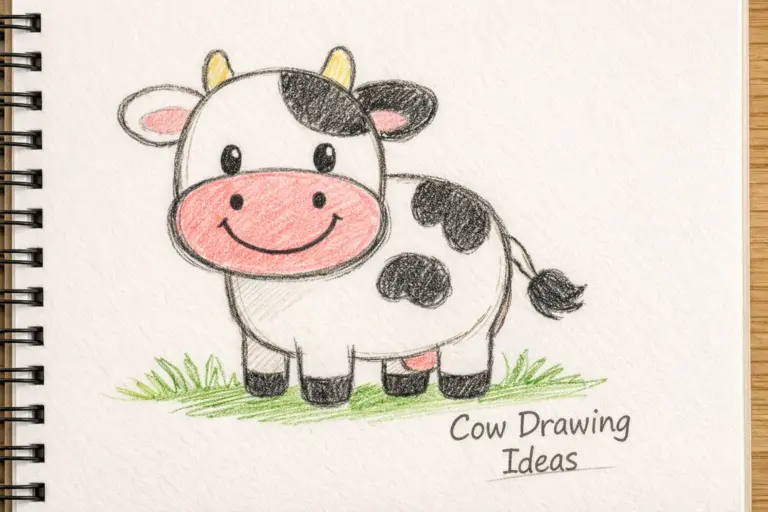
These melt hearts. Big eyes and tiny details make them pop. Try the strawberry kawaii cow with pink spots and a bow. Or the highland fluffy cow covered in shaggy fur lines. Baby cows look extra sweet with oversized heads. Funny ideas work great too.
Draw a cow wearing sunglasses or chewing bubble gum. Kawaii style uses soft round shapes. Small blush circles under the eyes and a consistent smile are the defining features of this style.
Realistic, Aesthetic, and Artistic Styles
You grow here once basics feel easy. Black-and-white pencil cows show real muscle and light. Shading the belly darker gives the drawing depth. Line art keeps only clean outlines for a modern look. Minimalist cows use five lines total yet still feel alive. Abstract cows turn spots into swirling patterns. Cow mandala art mixes the face with flower shapes around it. For realistic cow drawing, working from reference photos is the most effective approach. Observing the actual proportions and light direction before drawing produces noticeably more accurate results than drawing from memory.
Creative and Unique Cow Drawing Ideas
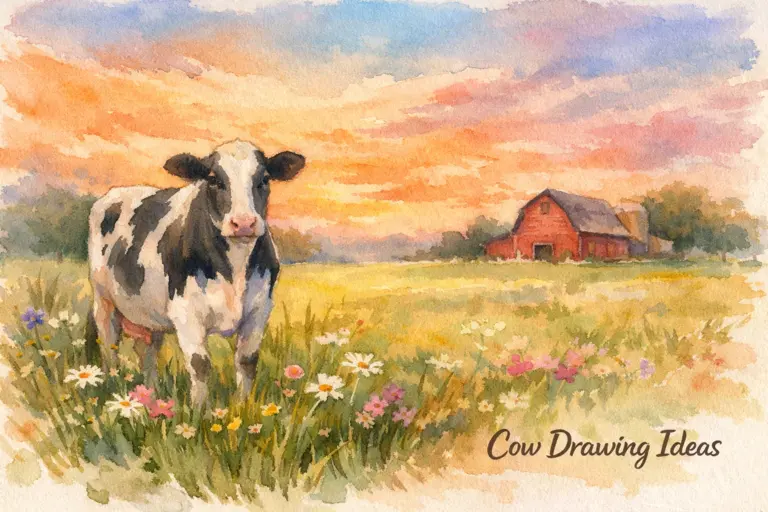
Let your imagination run. Place cows in flower fields with daisies around their hooves. Draw a cow at sunset with orange sky behind the barn. Funny scenes include a cow jumping over the moon or hiding behind a tree. Seasonal ideas shine too. Winter cows wear tiny scarves. Summer cows stand under beach umbrellas. One whimsical cow floats on a cloud with birds as friends. These scenes tell stories. Adding a specific background detail — a barn, a fence line, or a particular tree shape — gives the scene a more grounded, specific quality than a generic field setting.
Medium-Specific Cow Art Ideas
Different tools change the mood completely. Pencil drawings stay soft and easy to erase. Colored pencils add gentle layers for realistic fur. Watercolor creates dreamy skies behind the cow. Ink brings bold outlines and dramatic shadows. Markers work fast for bright cartoon cows. Digital art lets you undo mistakes forever. Switching between mediums periodically is a useful habit. Each one responds differently to pressure and layering, which builds a broader understanding of how tone and texture work.
Step-by-Step Tutorials
These four tutorials walk you through real drawings. Follow along at your own pace.
Tutorial 1: Easiest Number 55 Cow for Kids and Beginners
You need paper and a pencil.
Step 1. Write a big 5 and a big 5 side by side. The first 5 becomes the body curve.
Step 2. Add a smaller circle on top for the head.
Step 3. Draw two short legs under the body.
Step 4. Add two floppy ears on the head.
Step 5. Place two dots for eyes and a curved smile.
Step 6. Draw small horns if you like.
Step 7. Scatter round spots on the body.
Step 8. Add a tail with a tuft.
Step 9. Color the spots black or brown.
Step 10. Draw simple grass lines at the bottom.
The number method works well for younger beginners because it gives a familiar starting point before any animal shapes are introduced.
Tutorial 2: Cute Kawaii Cow with Flowers
Materials: pencil, eraser, colored pencils.
Step 1. Draw a round body oval.
Step 2. Add a smaller round head on top.
Step 3. Give the head huge sparkling eyes and tiny blush cheeks.
Step 4. Place soft floppy ears and short curved horns.
Step 5. Draw a sweet smile and small snout.
Step 6. Add four short legs and tiny hooves.
Step 7. Draw a swirly tail.
Step 8. Place three daisies beside the cow.
Step 9. Color the body soft pink, spots white, flowers bright yellow.
Step 10. Add light blue sky behind everything.
The oversized eyes are the defining feature of kawaii style. Keeping them large and symmetrical is more important than getting any other detail exactly right.

Tutorial 3: Realistic Dairy Cow in Pasture
You need a soft pencil and blending tool.
Step 1. Sketch the large body oval tilted slightly.
Step 2. Add the head shape and neck.
Step 3. Draw realistic ears and short horns.
Step 4. Place the eyes with light reflection dots.
Step 5. Shape the snout and nostrils carefully.
Step 6. Add four legs with proper joints.
Step 7. Draw the tail with hair details.
Step 8. Shade the body with light and dark patches.
Step 9. Add grass and distant hills in the background.
Step 10. Blend shadows under the belly for depth.
The shading step is where the drawing shifts from flat to three-dimensional. Darker values under the belly and behind the legs create the impression of volume without requiring complex technique.
Tutorial 4: Baby Calf with Flowers
This one tugs at the heart.
Step 1. Draw a smaller, rounder body.
Step 2. Add a large head almost as big as the body.
Step 3. Give extra big curious eyes.
Step 4. Draw tiny floppy ears and no horns yet.
Step 5. Add wobbly legs and small hooves.
Step 6. Place a short tail.
Step 7. Draw flowers all around the calf.
Step 8. Color soft brown with white spots.
Step 9. Add pink flowers and green grass.
Step 10. Shade gently under the belly for softness.
The proportions on a calf are different from an adult cow — the head is larger relative to the body, and the legs are shorter and less steady looking. Getting those proportions right is what makes the drawing read as a young animal.
Pro Tips for Composition and Background Mastery
Place your cow slightly off center so the picture feels alive. Leave space on one side for grass or sky. Backgrounds tell the story. Simple hills and a barn make the cow feel at home. Clouds in the background soften the overall composition and reduce the visual weight of an empty sky. Drawing the same composition multiple times with the subject in different positions is one of the fastest ways to develop an instinct for placement.
Taking Your Cow Drawings to Social Media
Photographing finished drawings in natural window light produces cleaner, more accurate colors than artificial lighting. A time-lapse video of the drawing process tends to perform well on social platforms because the progression from blank page to finished drawing holds attention.
Short captions that describe the drawing or the technique used give viewers context without requiring them to ask. Consistent posting with relevant tags helps other artists find the work over time.
Exploring Related Farm Animals
Once cows feel easy, try a goat or sheep next. Their shapes follow the same oval rule. A pig adds round fun. Horses stretch taller. Draw a whole farm scene with all of them together. Drawing multiple farm animals together in one scene is a good intermediate challenge once individual animals feel comfortable.
Frequently Asked Questions About Cow Drawing Ideas
Final Thoughts About Cow Drawing Ideas
Cow drawing covers a wide range of difficulty levels within a single subject. The same basic oval-and-rectangle structure that works for a five-minute beginner sketch also underlies a detailed realistic portrait — the difference is in the observation and the layering, not the fundamental approach. Starting with the simplest version and working toward more detail over multiple sessions is more effective than attempting a complex drawing before the basic proportions feel natural. The tutorials and ideas in this guide are organized to support that progression.