Simple Drawing Ideas (A Practical Guide for Beginners Who Want Fast Progress)
What Are Simple Drawing Ideas?
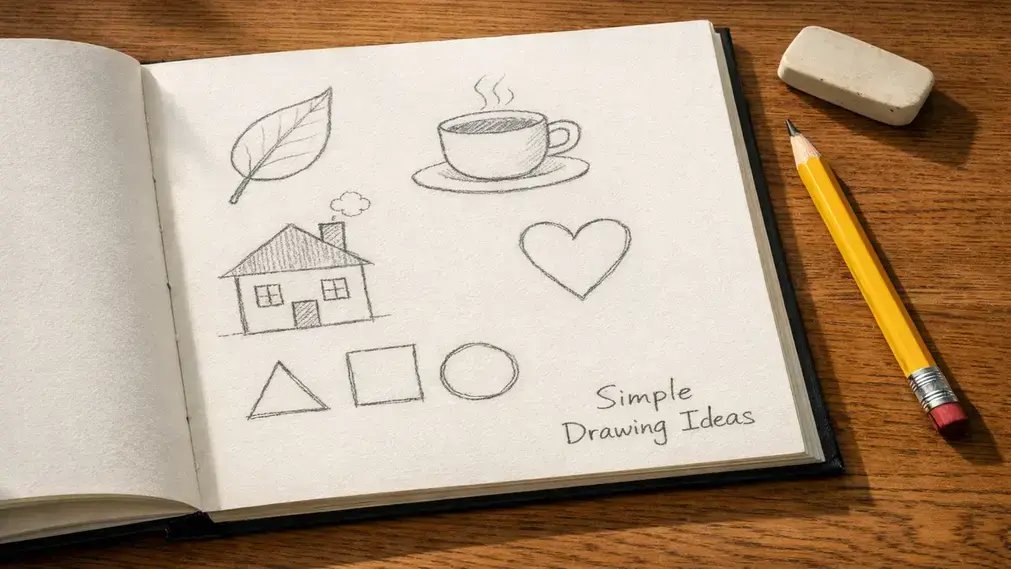
Simple drawing ideas use basic shapes and clean lines. They focus on structure, not heavy detail. They help you practice without feeling overwhelmed. You do not chase perfection here. You chase progress. A circle. A square. A soft curve. These shapes train your hand and eye together. Over time, they build control. Control builds confidence. Confidence makes you return to the page.
Why “Simple” Drawing Ideas Actually Build Real Skill
The Power of Starting Simple
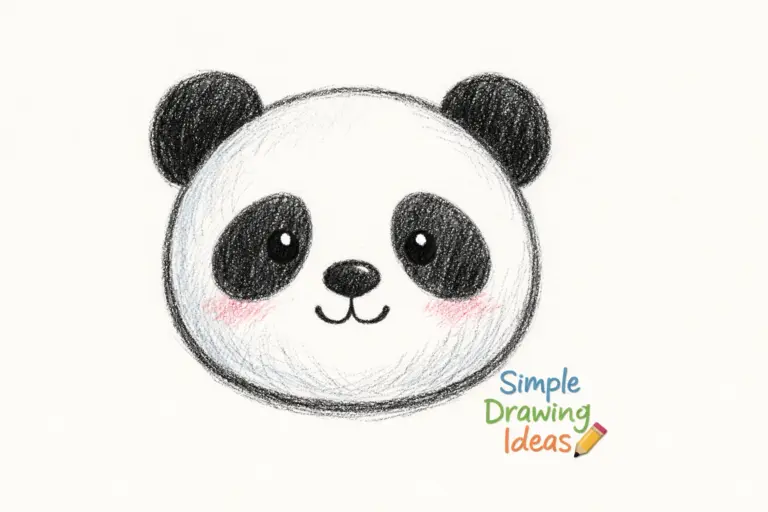
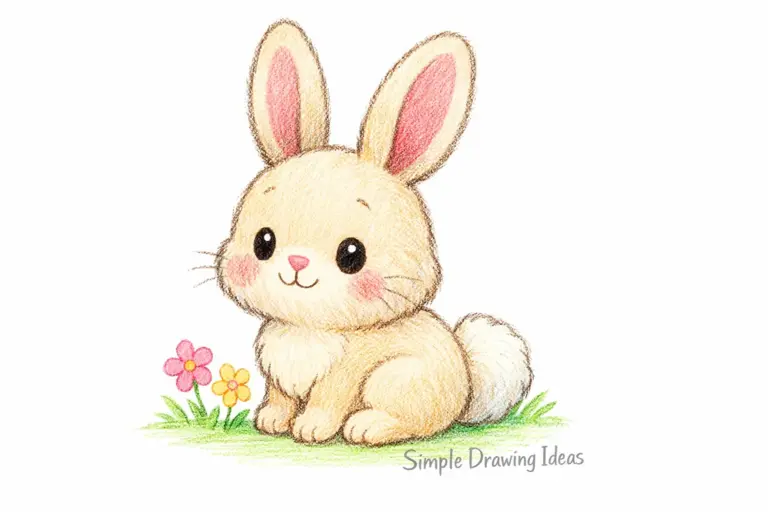
Simple subjects work because they limit the number of decisions you make at once. When you draw a complex scene, you are managing perspective, proportion, shading, and detail all at the same time. Any one of those can go wrong and pull the whole drawing apart. When you draw a leaf or a coffee cup, the decisions are fewer. Where does the curve start? Is this side wider than the other? That narrow focus lets you notice exactly what is going wrong — and fix it in the next attempt.
This is how specific skills improve. Line control gets better when you draw subjects where line quality is the main challenge. Proportion improves when the subject is simple enough that proportion is the only thing to manage. Artists who seem to draw anything confidently got there by spending a lot of time on subjects that were not impressive. The simple subjects were not a phase they passed through — they were the foundation everything else was built on.
The Psychology Behind Beginner Frustration
Most beginners quit because the result does not match the expectation. You picture something clear and finished. What appears on the page looks nothing like it. That gap feels discouraging, and most people interpret it as a lack of ability rather than a lack of practice.
Simple subjects reduce that gap. A small mushroom or a basic leaf does not carry the same expectation as a portrait or a landscape. When the expectation is lower, the result feels more acceptable. An acceptable result means you try again. Trying again is where improvement actually happens.
The other issue is comparison. Most people compare their early sketches to finished work they see online, which shows no practice pages, no failed attempts, and no progression. What you are comparing against is the result of hundreds of hours of work that happened off screen.
Draw the same simple object five times in one session. The first will look rough. By the fifth, something specific will be better — a curve will be smoother, a proportion will be closer. That small, visible improvement is what keeps people going.
How to Choose the Right Simple Drawing Idea
The most common reason people stall is not a lack of ideas — it is decision paralysis. Too many options feel the same, so nothing gets started. A more useful question than “what should I draw?” is “what do I need from this session?” Some days you have ten minutes and want something finished. Other days you want to work on a specific weakness. The subject should match the goal.
If You Want Quick Wins (5-Minute Drawings)
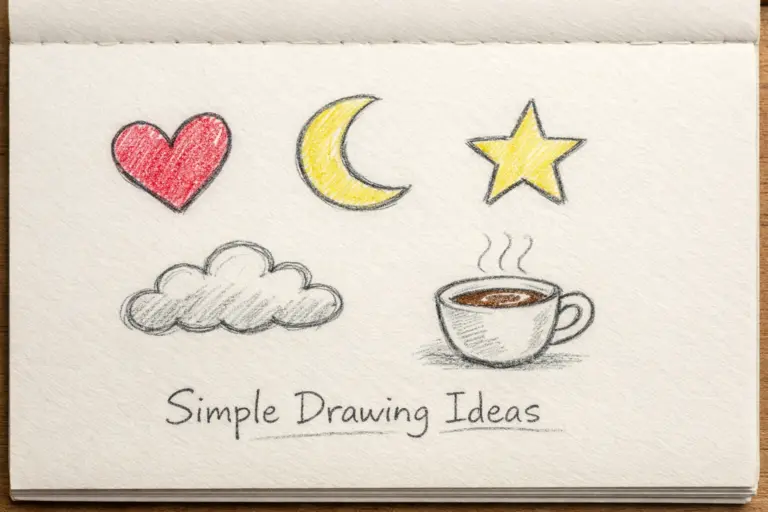
Quick wins build momentum. They work when time feels short. Tiny doodles fit perfectly. Draw a small heart. Sketch a tiny moon. Add a simple star. Focus on finishing, not perfecting. Line art icons feel satisfying. Draw a coffee cup in one continuous line. Sketch a minimal leaf. Outline a simple sun with straight rays. Minimalist objects sharpen clarity. Draw a candle. Sketch a book. Outline glasses with clean strokes. Let form carry the drawing.
Fill one page with five tiny drawings. A key. A cloud. A flower. A star. A cup. Each takes under a minute. Together, they create visible progress. Five minutes feels manageable. Often, five becomes ten. Starting feels easier when the task feels small.
If You Want Skill Practice
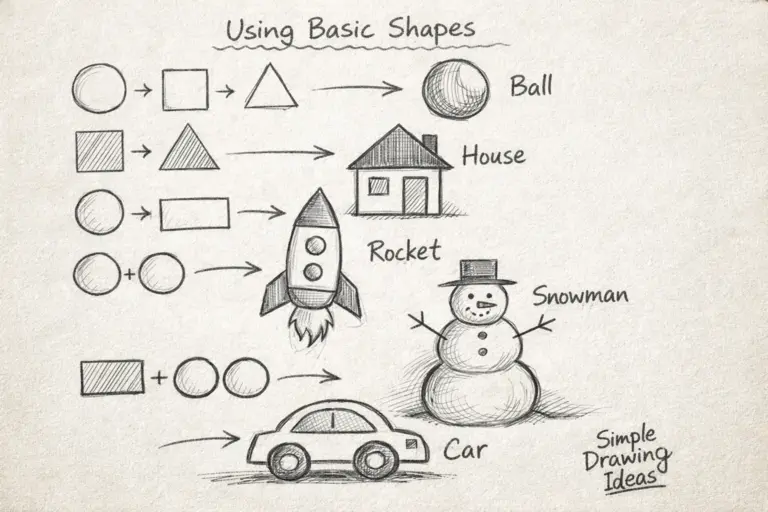
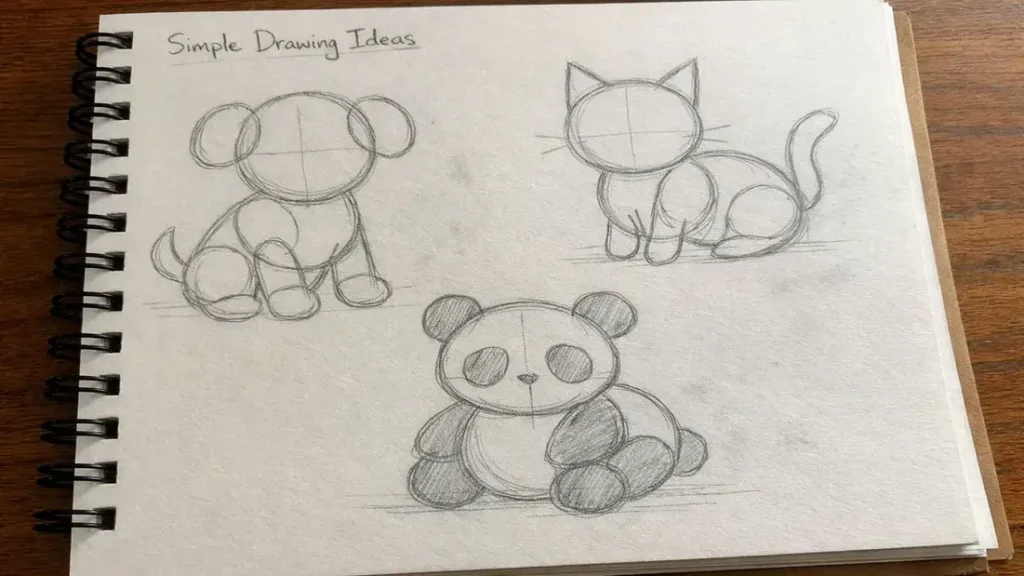
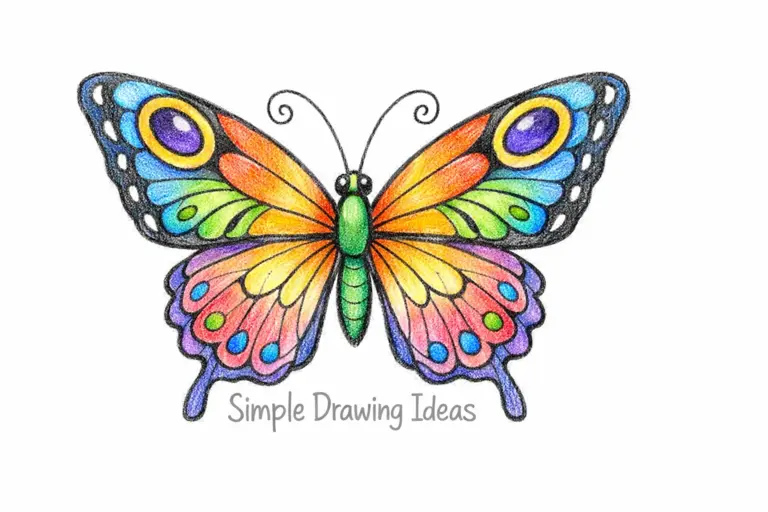
Some days you want focused improvement. Choose subjects that stretch specific skills. Practice proportion with simple faces. Use guide lines. Check spacing. Adjust gently. Train line control with long straight strokes. Draw smooth curves without lifting your pencil. Clean lines create confident drawings. Build structure through shapes. Turn circles into heads. Turn rectangles into buildings. Break objects into geometry first. Practice symmetry with butterflies or hearts. Compare both sides carefully. Balance trains accuracy.
Focused practice solves precise problems. Skill grows from attention.
If You Just Feel Bored
Boredom hides creative energy. Use playful methods. Try the random prompt method. Write ten simple subjects on small slips. Pick one blindly. Draw it immediately. Decision stress disappears. Use the one-object, five-styles challenge. Draw a tree realistically. Then cartoon style. Then minimal line art. Then bold silhouette. Then exaggerated. One object becomes five lessons. Match drawing to mood. Feel calm? Draw leaves or clouds. Feel energetic? Sketch lightning or geometric patterns. Feel reflective? Draw a simple portrait. When you act, boredom fades.
Simple Animal Drawing Ideas
Animals feel expressive even in simple form. Focus on basic shapes first.
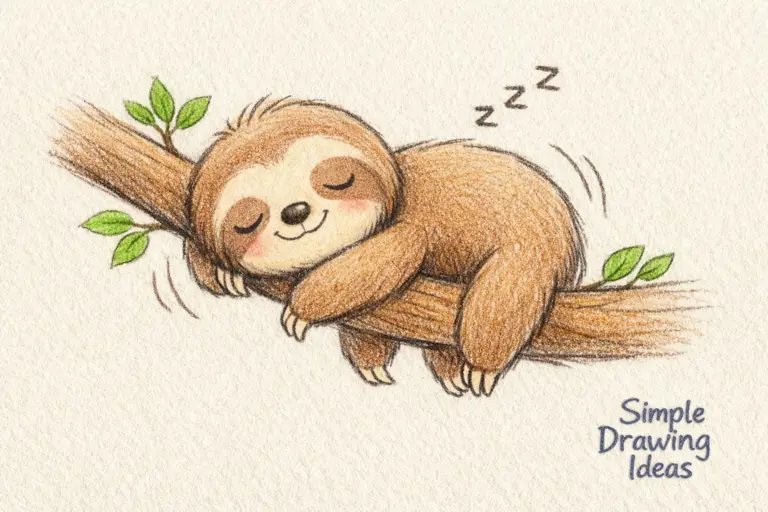
Sleeping Sloth
Draw a sloth hanging from a branch with closed eyes.
Tip: Use slow curved lines to make the pose relaxed.
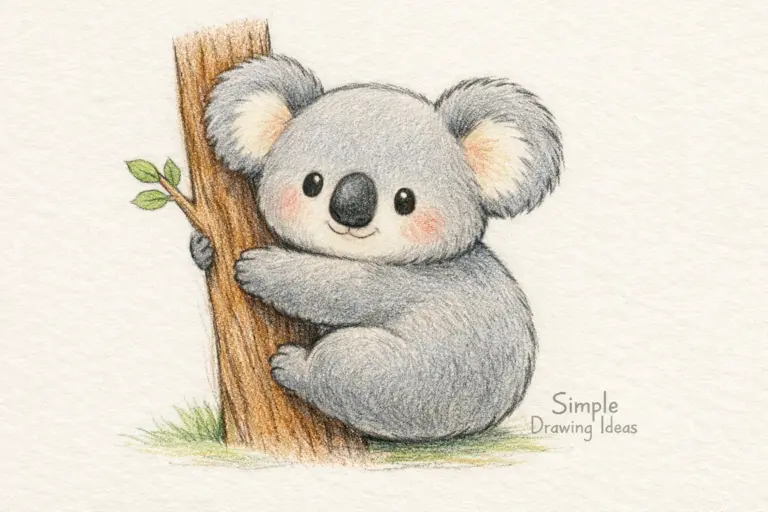
Tiny Koala
Sketch a round koala hugging a tree trunk.
Tip: Big fluffy ears make it instantly cute.
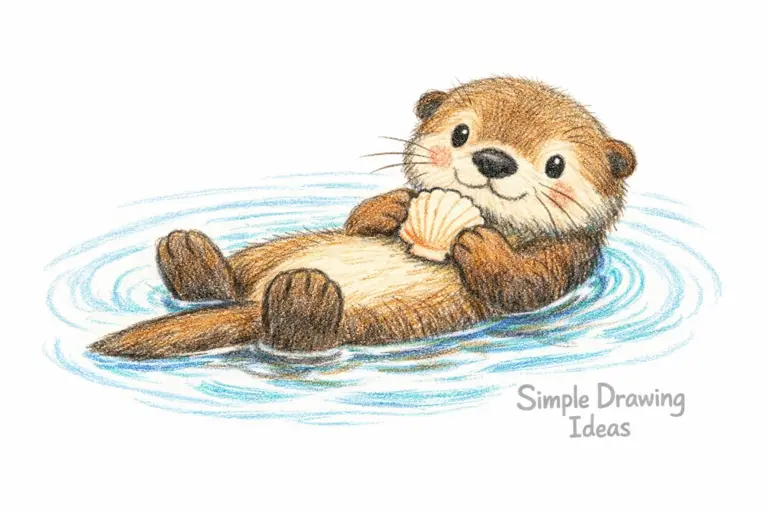
Little Otter
Draw an otter floating on its back holding a shell.
Tip: Add tiny whiskers and water ripples.
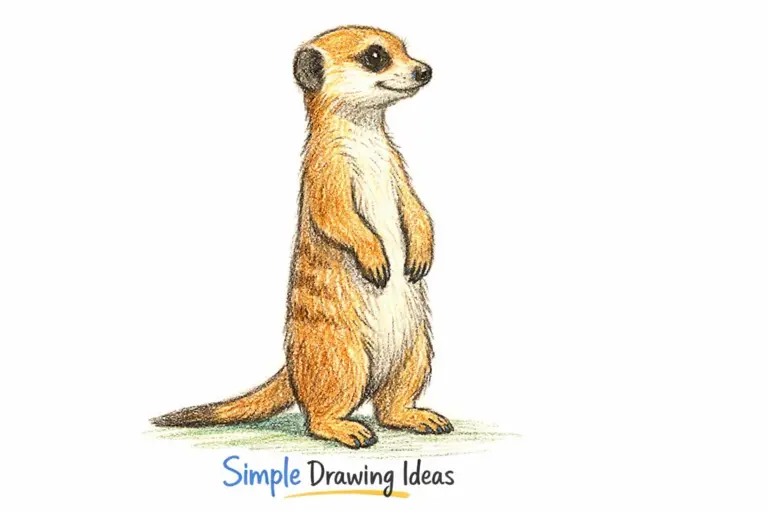
Curious Meerkat
Sketch a small meerkat standing upright.
Tip: Long body shapes help show its alert pose.
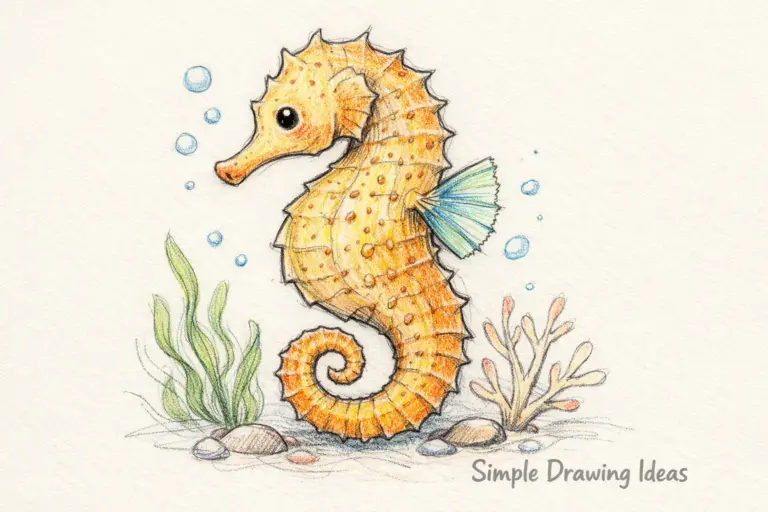
Tiny Seahorse
Draw a curled seahorse with small fins.
Tip: Use small dots to create texture.
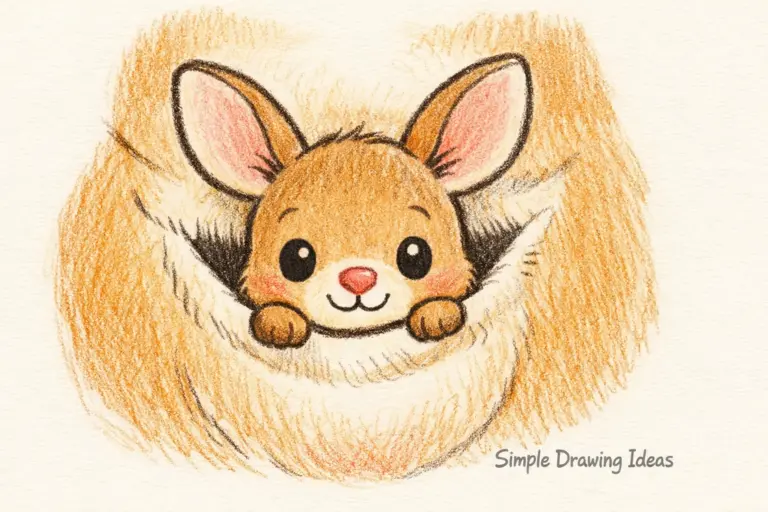
Baby Kangaroo
Sketch a kangaroo peeking from its pouch.
Tip: Focus on the head and ears for cuteness.
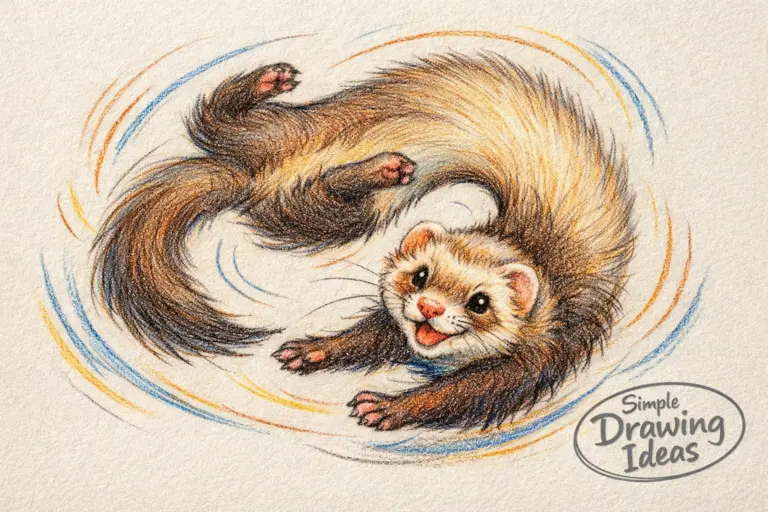
Playful Ferret
Draw a long flexible ferret twisting around.
Tip: Curved body lines show movement.
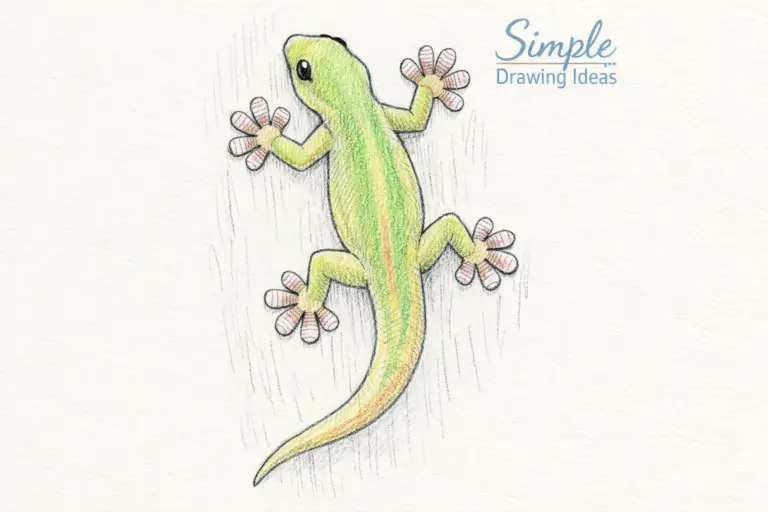
Tiny Gecko
Sketch a gecko climbing a wall.
Tip: Draw sticky round toes.
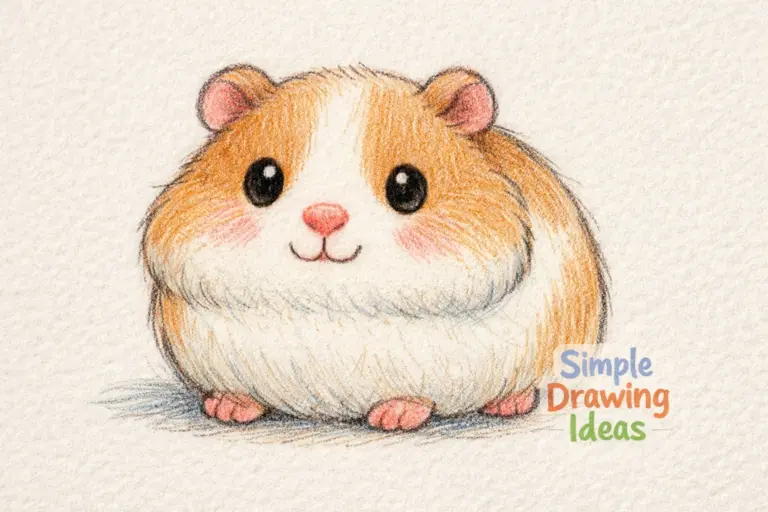
Chubby Guinea Pig
Draw a fluffy guinea pig with round cheeks.
Tip: Short legs make it look extra adorable.
Little Alpaca
Sketch an alpaca with a fluffy wool body.
Tip: Draw the wool using small cloud shapes.
Friendly Lobster
Draw a cartoon lobster with tiny claws.
Tip: Use simple curved segments for the tail.
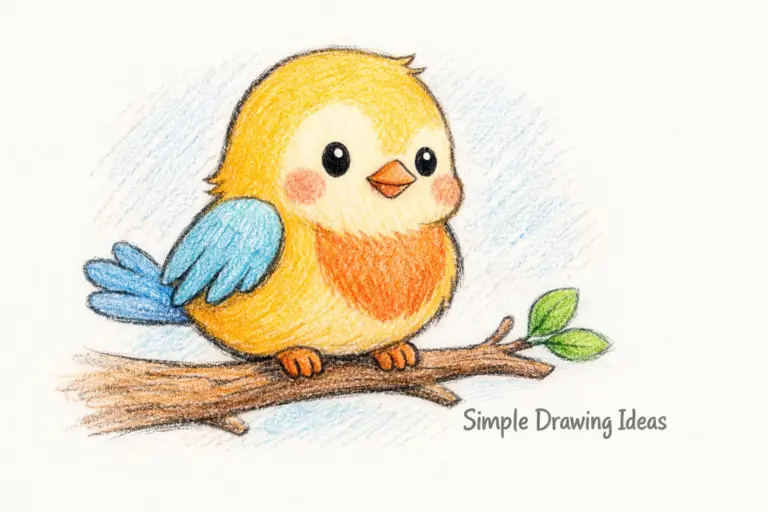
Tiny Parrot
Sketch a small parrot sitting on a branch.
Tip: Add a curved beak and simple feathers.
Baby Bat
Draw a tiny bat hanging upside down.
Tip: Use triangle wings folded around the body.
Little Crab
Sketch a sideways crab with big eyes.
Tip: Add simple shell patterns.
Happy Jellyfish
Draw a jellyfish floating underwater.
Tip: Wavy tentacles create gentle motion.
Tiny Duckling
Sketch a fluffy duckling waddling.
Tip: Draw tiny webbed feet.
Little Squirrel with Nut
Draw a squirrel holding an acorn.
Tip: A big fluffy tail adds character.
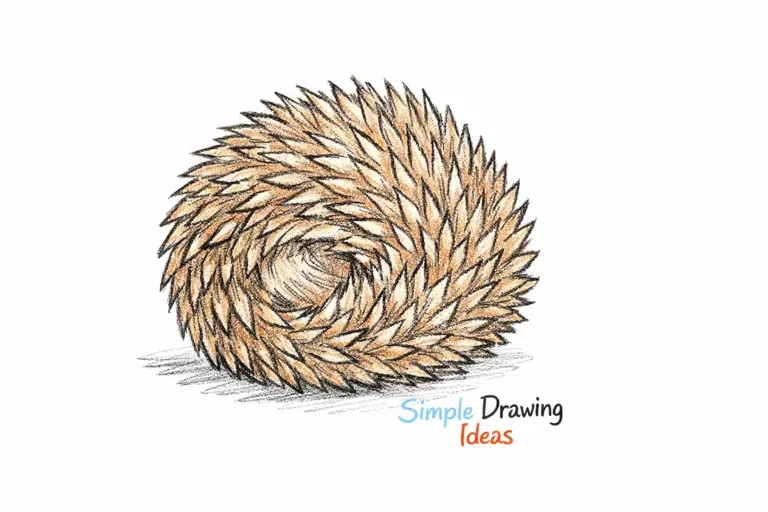
Curled Armadillo
Sketch an armadillo rolled into a ball.
Tip: Use repeating shell patterns.
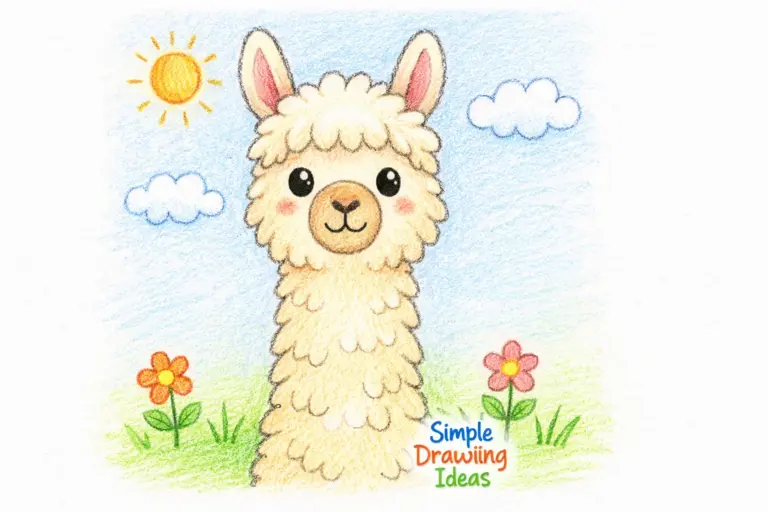
Little Llama
Draw a standing llama with long neck.
Tip: Keep legs thin and body fluffy.
Tiny Caterpillar
Sketch a caterpillar crawling on a leaf.
Tip: Use small connected circles.
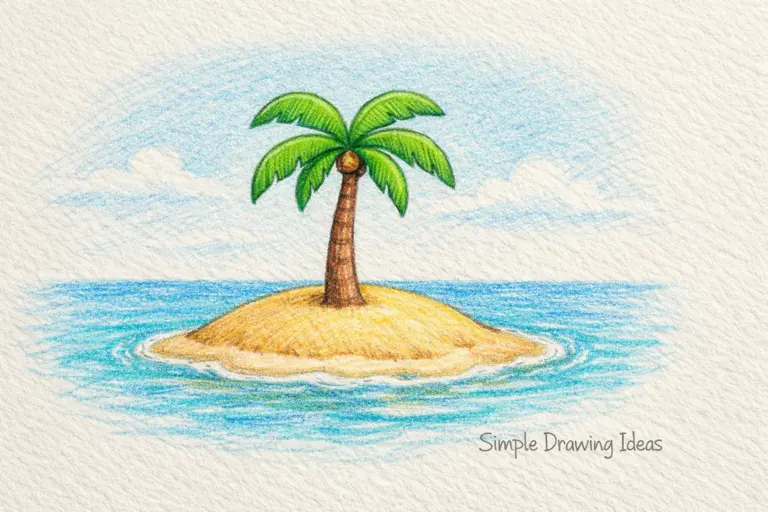
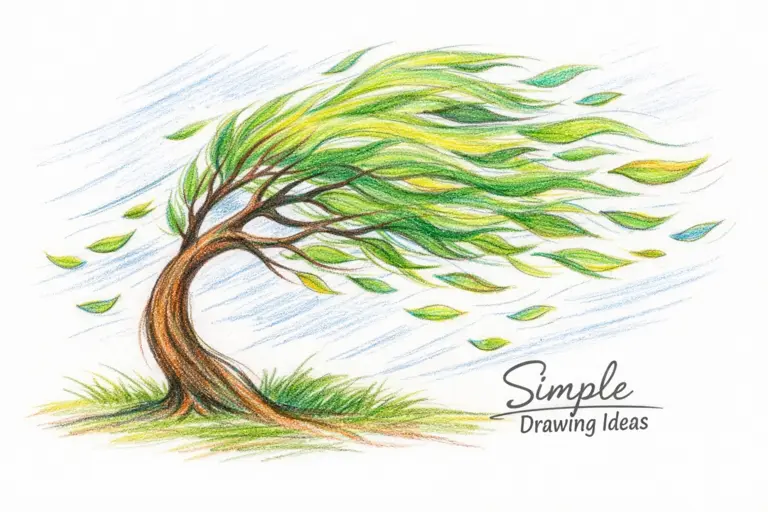
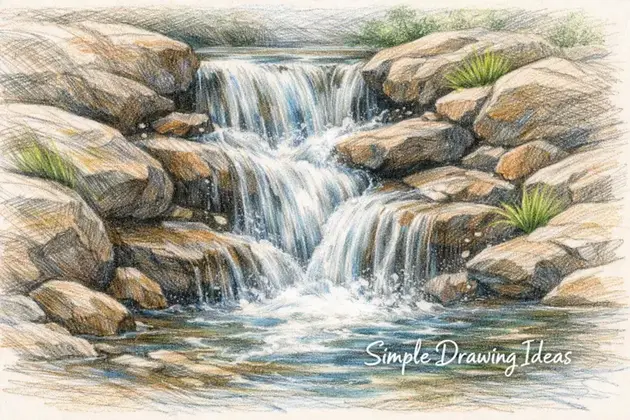
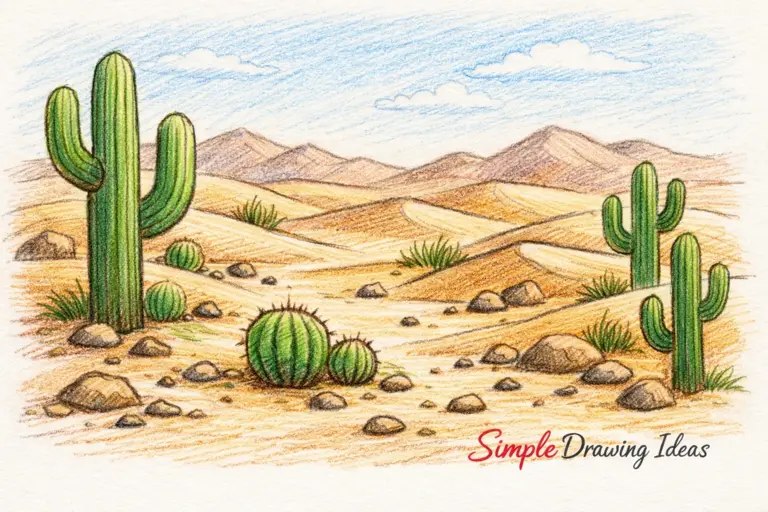
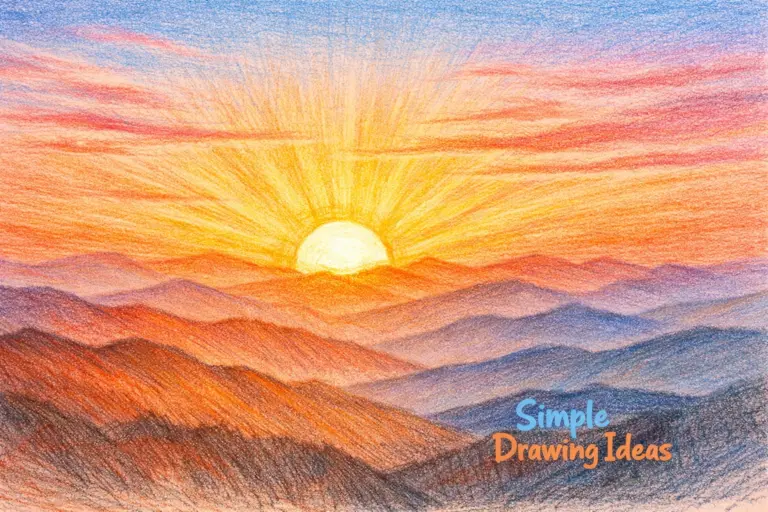
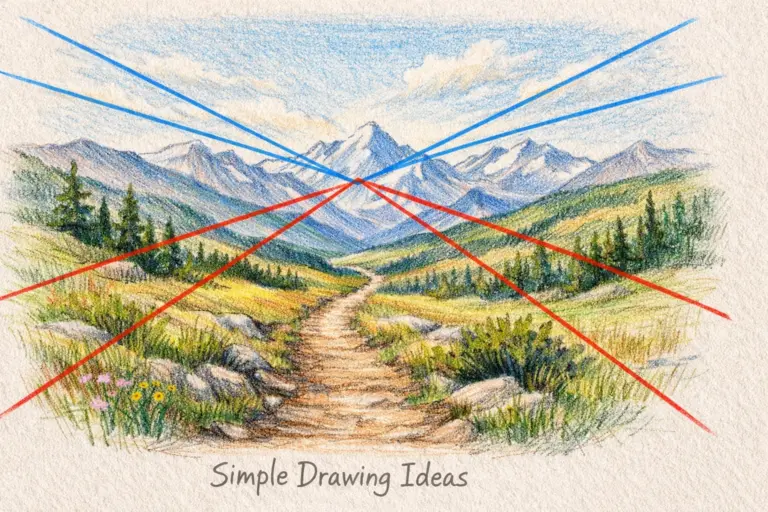
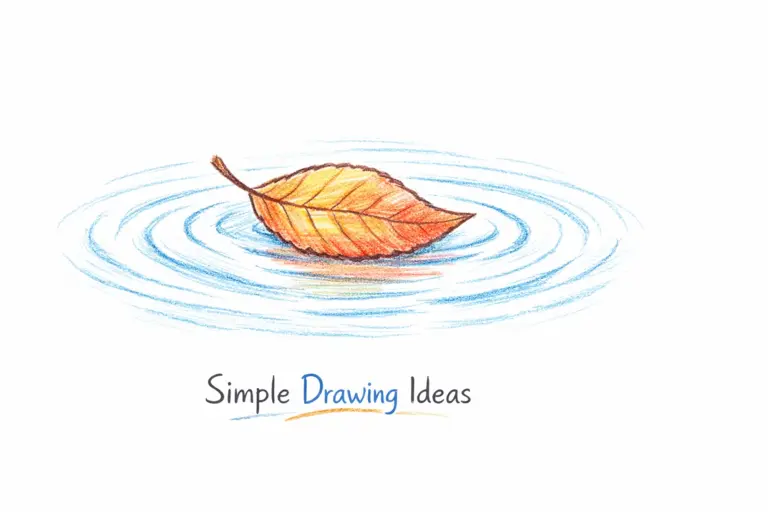
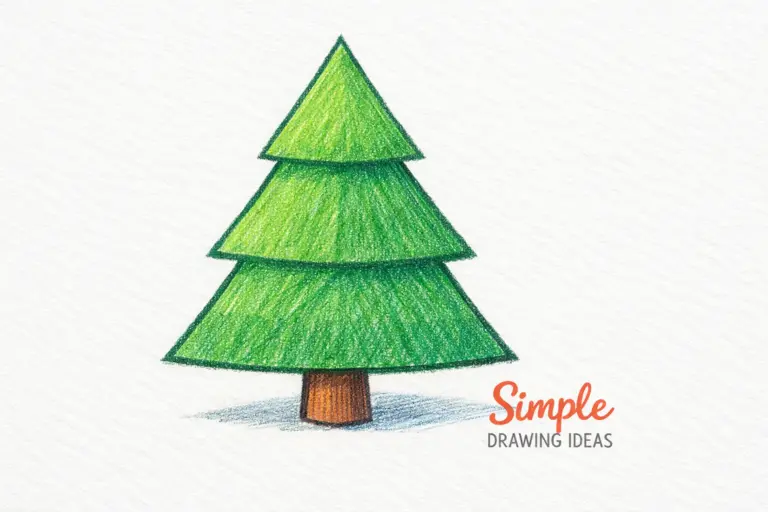
Simple Nature Drawing Ideas
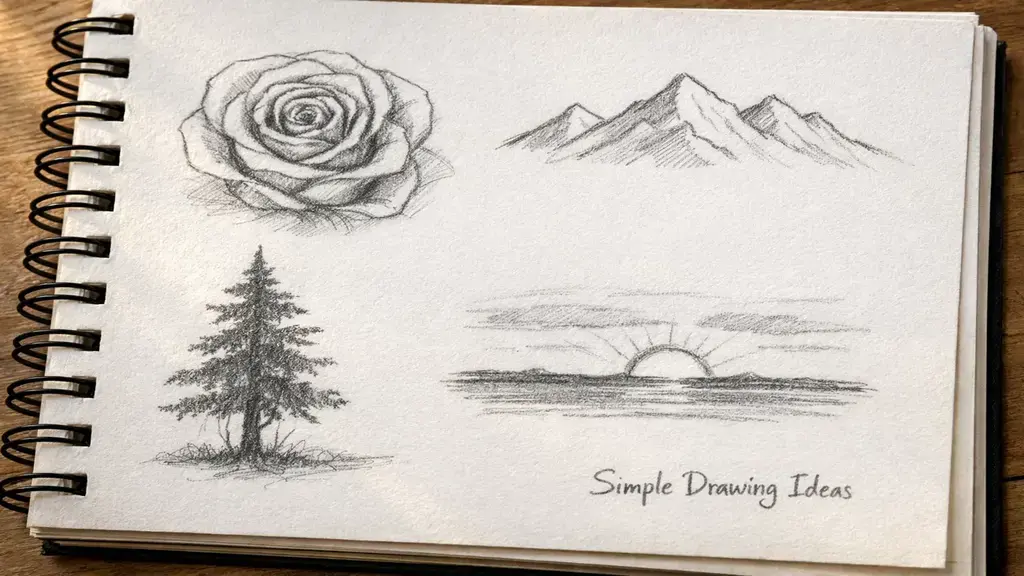
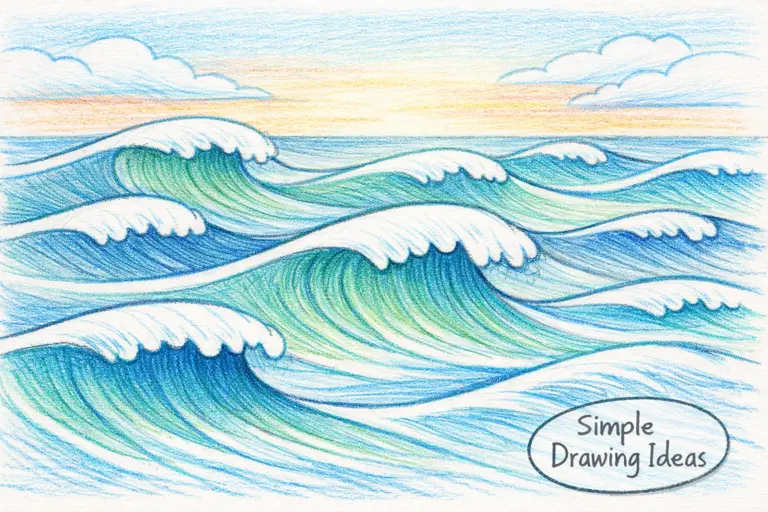
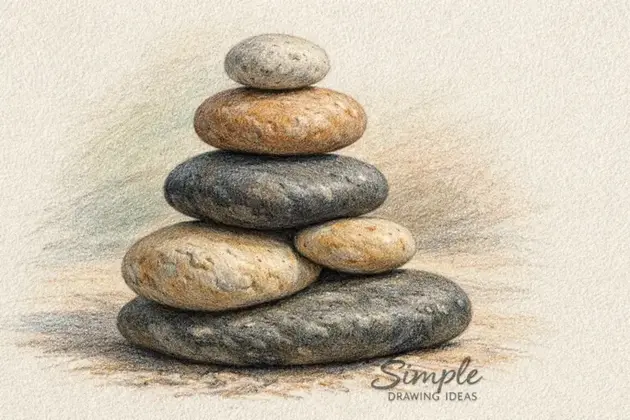
Nature offers rhythm and repetition. Use light layering for depth.
- Snowy Hill
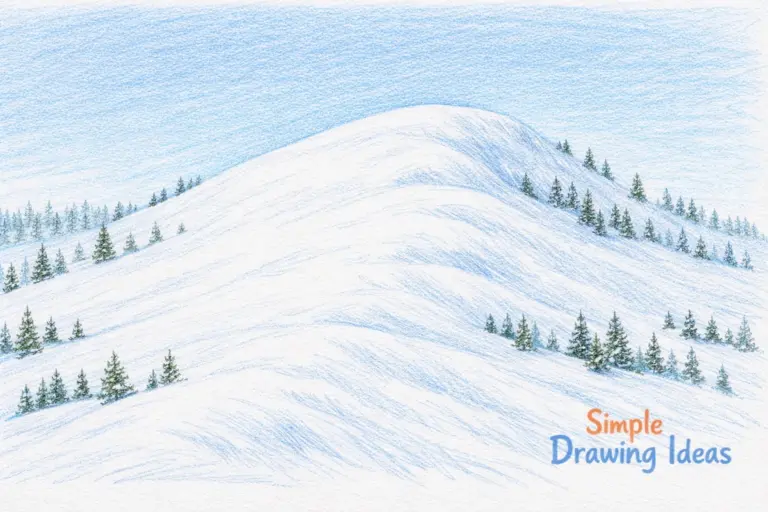
Sketch a hill covered in snow.
Tip: Add tiny trees for scale.
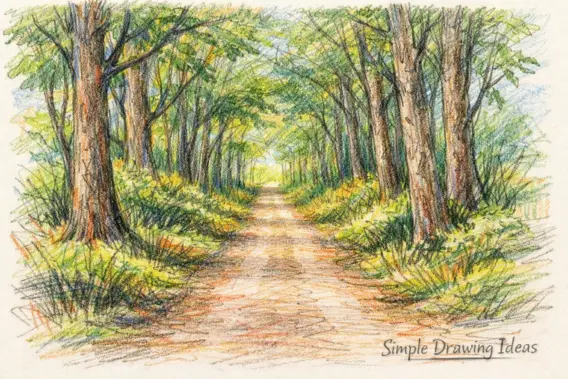
- Forest Pathway
Draw a path between trees.
Tip: Narrow the path as it goes back.

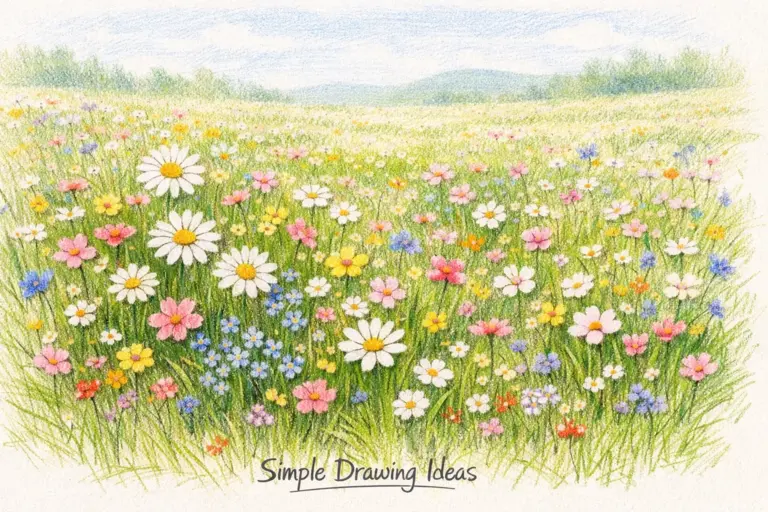
- Flower Field
Draw small flowers across a meadow.
Tip: Vary flower sizes.
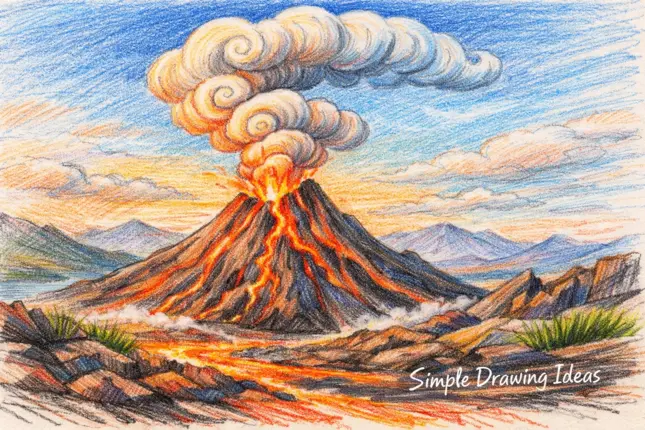
- Simple Volcano
Sketch a volcano with smoke.
Tip: Add curved smoke clouds.
Simple Object Drawing Ideas
Objects surround you daily. Familiarity makes them easier to draw.
Key with Decorative Head
Draw a vintage style key.
Tip: Add simple patterns.
Pocket Watch
Sketch a small round watch with chain.
Tip: Keep numbers simple.
Old Lantern
Draw a hanging lantern.
Tip: Add light glow lines.
Compass
Sketch a circular compass.
Tip: Draw north arrow clearly.
Simple Kite
Draw a kite flying in the sky.
Tip: Add ribbon tails.
Desk Lamp
Sketch an adjustable lamp.
Tip: Use simple geometric parts.
Notebook Stack
Draw books stacked neatly.
Tip: Add different spine sizes.
Tiny Plant Pot
Sketch a plant growing in a pot.
Tip: Add small leaves.
Paper Clip Shapes
Draw paper clips in creative positions.
Tip: Overlap them.
Music Headphones
Sketch headphones resting on a table.
Tip: Add soft curves.
Objects train perspective gently. Notice angles. Notice alignment.
Simple People and Character Drawing Ideas
People feel complex, but structure simplifies them.
Simple Sitting Person
Draw a relaxed person sitting cross-legged.
Tip: Use basic stick shapes first.
Person Reading Book
Sketch someone reading quietly.
Tip: Add curved posture.
Simple Dancer Pose
Draw a dancer mid-motion.
Tip: Flowing lines show movement.
Skater Character
Sketch a character riding a skateboard.
Tip: Add motion lines.
Simple Artist Character
Draw a person holding a paintbrush.
Tip: Add paint splashes.
Person Walking Dog
Sketch a person holding a leash.
Tip: Show movement with steps.
Person Drinking Coffee
Draw a character holding a mug.
Tip: Add steam lines.
Kid Flying Kite
Sketch a child holding a kite string.
Tip: Draw the kite high in the sky.
Simple Chef Character
Draw a chef with a tall hat.
Tip: Add a spoon or pan.
Traveler with Backpack
Sketch a person walking with a backpack.
Tip: Add small road or mountains.
Faces teach expression through small changes.
Aesthetic Small Sketchbook Ideas
Small pages feel personal. Keep designs light and intentional.
These drawings rely on mood more than detail.
Bullet Journal Friendly Drawings
Small drawings add personality to planning.
Tiny Calendar Icon
Tip: Draw squares for days.
Water Bottle Tracker Icon
Tip: Shade bottles when completed.
Mini Habit Tracker Grid
Tip: Use check marks.
Small Weather Icons
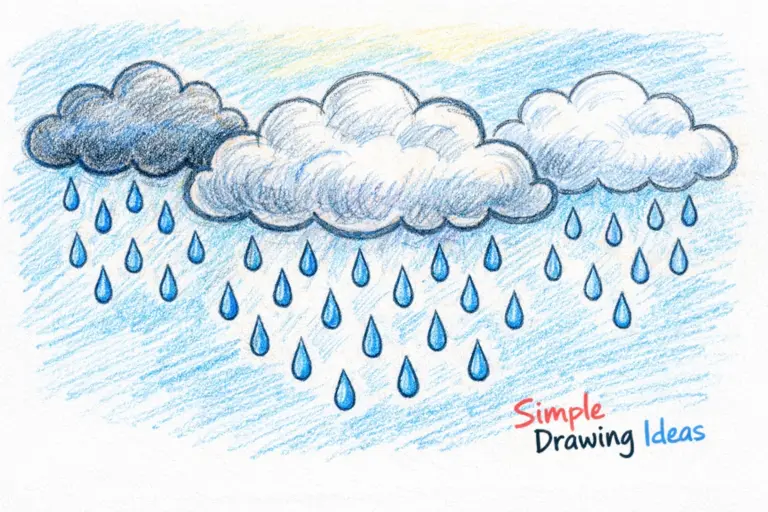
Tip: Draw sun, rain, clouds.
Tiny Clock Icons
Tip: Use them for schedule blocks.
Simple Arrow Markers
Tip: Use arrows for notes.
Small Checkbox Flowers
Tip: Turn checkboxes into petals.
Tiny Flag Markers
Tip: Perfect for page highlights.
Minimal Star Rating Icons
Tip: Use stars for goals.
Tiny Page Divider Lines
Tip: Add dots or leaves.
Small details change how a page feels. When pages feel inviting, you return often.
The 3-Layer Beginner Drawing Method
Many beginners rush details. Structure first brings clarity.
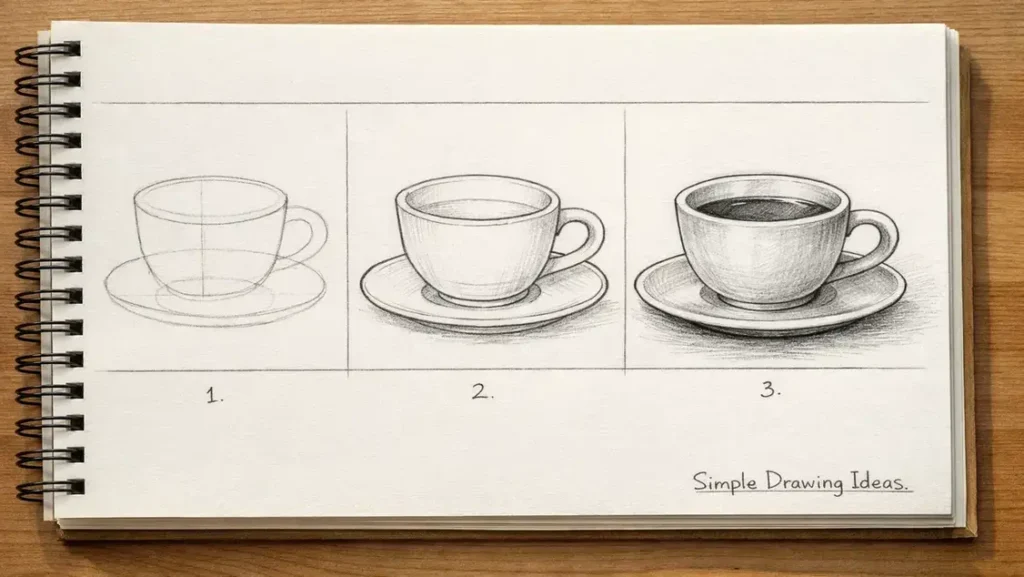
Layer 1 – Outline Only
Sketch basic shapes lightly. Map size and placement. Adjust freely.
Layer 2 – Clean Proportions
Refine spacing and alignment. Darken accurate lines. Correct gently.
Layer 3 – Optional Detail
Add selective shading or texture. Stop before clutter appears.
Place. Refine. Enhance.
That order keeps drawing calm and controlled.
10-Minute Practice Blueprint
🎨 Simple Drawing Idea Generator
Click the button and get an instant beginner-friendly drawing idea.
Ten minutes daily builds real change.
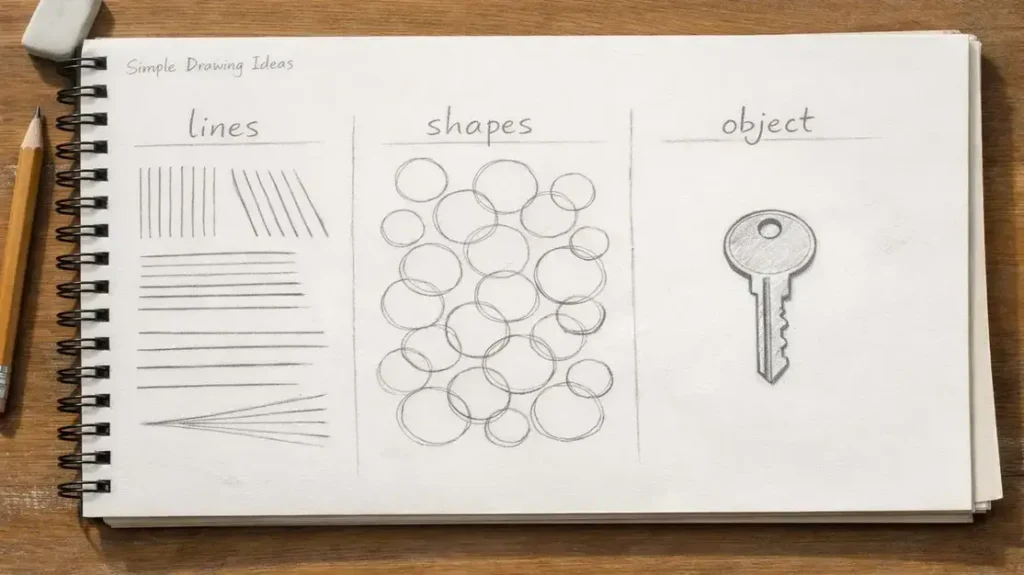
3 Minutes – Lines
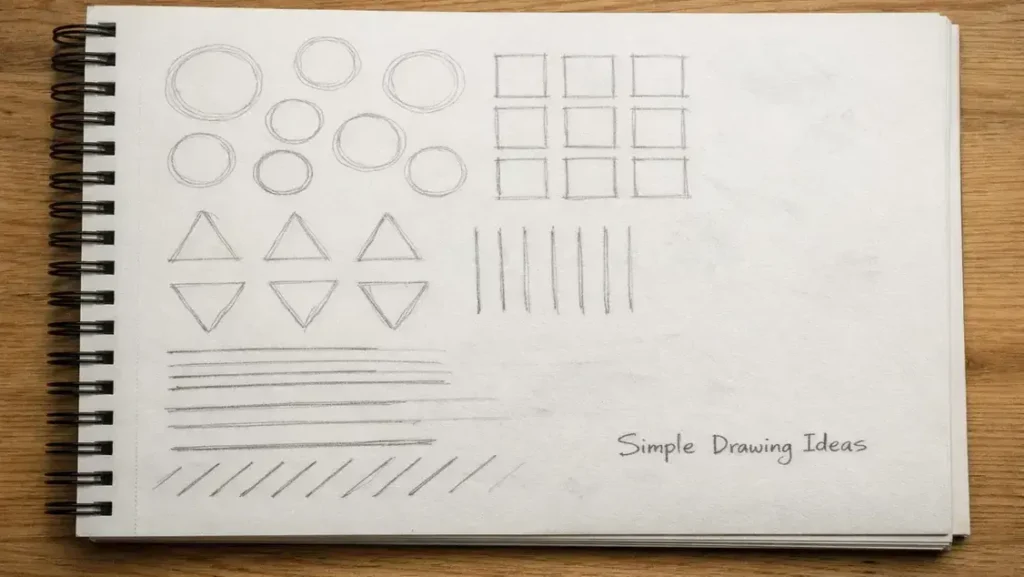
Draw straight strokes across the page. Then curved arcs. Focus on smooth motion.
3 Minutes – Shapes
Draw circles, squares, and triangles. Combine them into cylinders and boxes.
4 Minutes – Simple Subject
Draw one small object. Use light shapes first. Refine quickly. Finish within time.
Short sessions build steady habit. Habit builds skill.
Common Beginner Mistakes
Drawing too small
Solution: Draw larger. Use your arm, not only fingers.
Pressing too hard
Solution: Keep grip relaxed. Build darkness slowly.
Ignoring spacing
Solution: Check negative space. Compare distances carefully.
Comparing too early
Solution: Compare with past work only. Notice small improvements.
Over-detailing
Solution: Strengthen structure first. Add detail last.
Awareness corrects mistakes faster than frustration.
My Honest Advice About Simple Drawing Ideas
You do not need expensive tools to start. A basic pencil and printer paper are enough. Skill grows from repetition, not from equipment.
Do not wait until you feel ready. Start with one object today. The first attempt will be rough. The fifth will be noticeably better. That gap — between attempt one and attempt five — is where real skill gets built.
Keep your early drawings. Date them. Looking back after two months shows you progress that feels invisible day to day. If you want structured beginner lessons alongside your practice, Sketchbook Skool offers free and paid drawing courses for all levels.
Quick Start Challenge: One Object, Three Styles
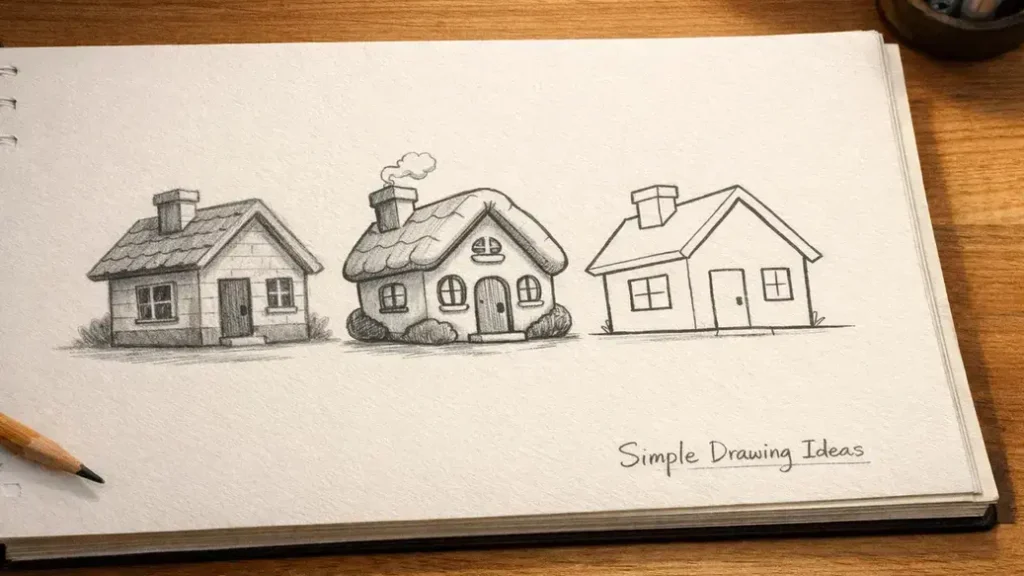
Pick one object near you.
Realistic
Observe carefully. Draw accurate proportions. Add light shading.
Cartoon
Exaggerate shapes. Add personality. Simplify boldly.
Minimal line art
Use only clean outlines. Remove extra detail.
Place the three versions side by side. Notice how perspective changes everything. Creativity lives in approach, not complexity.
Start now.
Frequently Asked Questions About Simple Drawing Ideas
Conclusion – Simple Drawing Ideas
Simple drawing ideas work because they are manageable. Manageable tasks get done. Tasks that get done build habit. Habit builds skill. The progression is not complicated. Pick one subject. Draw it. Note what looks off. Draw it again with that one thing in mind. Over weeks, those small corrections compound into real improvement. Your sketchbook from month three will look noticeably different from month one — not because you found a shortcut, but because you showed up consistently with simple subjects and paid attention. That is the whole method.
Pick up your pencil. Draw one thing today.